


A practical guide to choosing a 20kWh capacity solar battery in Australia
If you are looking at a 20kWh solar battery, you already know your household is not running on modest energy use. Maybe you have a family of five or more burning through power from the moment the sun goes down. Maybe you are charging an electric vehicle overnight, or partway through electrifying your home's heating and hot water. Or maybe energy independence matters more to you than the average household, and you want a storage system that can genuinely deliver it.
Whatever brought you here, this guide covers what a 20kWh solar battery is, who it suits, how sizing works in practice, what shapes the price, what to look for before signing anything, and why the current rebate landscape makes timing a genuine factor for buyers at this capacity.
20kW vs 20kWh: What is the Difference?
This is one of the most common points of confusion in solar, and it is worth clearing up before anything else.
A 20kW solar system describes the peak power output of your solar panels in ideal conditions. A 20kWh solar battery describes how much energy the battery can store.
Two different measurements. Two different jobs.
When people search for a "20kW solar battery" or a "20kW battery," they almost always mean a 20kWh solar battery. Batteries store energy, and energy is measured in kilowatt-hours (kWh). Power output from panels or from a battery's continuous discharge rate is measured in kilowatts (kW).
Now you know. Batteries are kWh. Panels are kW.
What is a 20kWh Solar Battery?
A 20kWh solar battery sits at the sweet spot of the residential battery market in Australia. It's large enough to make a genuine, measurable difference to your energy bill, without oversizing beyond what most homes can actually use.
To frame it practically: according to the Australian Energy Regulator's Residential Energy Consumption Benchmarks, a typical Australian household (of 2-3 people) uses between roughly 15 and 21kWh of electricity per day, depending on household size and location. A 20kWh battery doesn't just take the edge off your evening usage. For many homes, it can cover it almost entirely.
Before the Cheaper Home Batteries Program launched in July 2025, the average Australian household installing a battery was choosing 10-12kWh. That made sense at the time, when upfront costs were higher and incentives were limited. Since the rebate, that average has jumped significantly - industry data puts it at around 23.12kWh across the program's first 6 months - reflecting how much demand was waiting to be unlocked once the economics improved. To better illustrate this hunger for solar storage, Canstar reports that the average bumped up to 26.8kWh for Q4 2025 alone.
A 20kWh system sits right in that new reality.
Under the current rebate structure:
- the first 14kWh attracts full support,
- and the remaining 6kWh receives 60% of the discount.
This means a 20kWh battery still attracts a strong rebate while giving you meaningful headroom over a standard 10-13kWh system.
Is 20kWh enough battery storage, or do you need more?
For households already pushing past 25kWh per day - and that happens faster than you'd think; add an electric vehicle, a pool, a heat pump, or simply a growing family - you're there.
It's worth asking: does 28kWh actually make more sense for your situation?
28kWh may be the sweet spot. It's the highest battery size that still qualifies for the second rebate tier, so you're getting maximum government support without leaving money on the table.
And with feed-in tariffs now sitting in the low single digits, every kilowatt-hour you store and use yourself is worth far more than anything you'd earn sending it back to the grid.
It also gives you room to grow.
Know what you're after, or want to have a conversation? Get a Quote
Do You Actually Get the Full 20kWh Out of a 20kWh Solar Battery?
Rarely, and it is worth understanding why before comparing products.
The advertised figure is the total nominal capacity. What lands in your home as usable electricity is shaped by several technical realities.
Depth of Discharge (DoD)
Depth of discharge (DoD) tells you what percentage of stored energy is actually accessible in each cycle. It is expressed as a percentage, and it varies between battery models.
Here is how common DoD ratings affect a 20kWh solar battery:
- 95% DoD: You get 19kWh usable per cycle (20 x 0.95). Solid and common across quality LFP batteries.
- 96% DoD: Edges up to roughly 19.2kWh usable per cycle. The difference sounds minor per cycle, but across thousands of cycles, it compounds.
- 100% DoD: Theoretically 20kWh fully accessed. Less common in practice. Most manufacturers recommend keeping a small reserve to protect longevity and satisfy warranty conditions.
Round-Trip Efficiency
Beyond DoD, there is a small but real conversion loss, typically around 5-10%, as energy moves from solar panels to batteries to your home. AC-coupled systems, where a battery is retrofitted to an existing solar setup, involve an extra conversion step that slightly increases this loss. Most quality modern systems publish a round-trip efficiency figure, and it is worth checking when comparing options.
Backup Reserve
If you want blackout protection enabled, a portion of the battery, usually 10-20%, will be held in reserve at all times and unavailable for daily use. This is so there is actually stored energy available to power your home during a grid outage.
The headline 20kWh figure is always going to be slightly optimistic. Comparing usable capacity, not nominal capacity, is the more accurate way to shop.
Is a 10-13kW Solar System with a 20kWh Battery the Right Pairing?
For most high-demand households, yes. The logic is straightforward.
A larger solar array generates more daytime surplus. A 10kW solar system can give you 40kWh/day on average, while a 13kW solar system can easily produce over 50kWh/day on average. A 20kWh battery gives you somewhere useful to put all of it.
The 10kW system + 20kWh battery combination reduces the risk of the battery sitting half-charged on good days or running flat before midnight on heavy-use nights.
This pairing tends to work well for:
- Households with 5 or more people
- EV owners charging overnight, particularly with two vehicles
- Homes running air conditioning or heating well past sunset
- Properties with electric hot water systems, heat pumps, or pool pumps
- Small businesses wanting meaningful storage alongside a commercial solar array
It also suits households that are not quite at peak usage yet but will be soon. Think of the family buying their first EV in the next year or two, or the home midway through electrifying its appliances. A 20kWh battery bought now will have considerably more work to do as those changes arrive, which is often exactly the point.
If your home uses most of its power during business hours and evenings are quiet, a smaller battery at a lower price point may serve you just as well. Size to your actual pattern, not your aspirational one.
Solar Oversizing for Battery-Paired Systems
Why Your Solar System Needs a Generation Buffer
If you have been following solar news or researching home energy systems, you have likely come across the "20% rule for solar." The idea is straightforward: size your solar array to produce roughly 20% more energy than your household consumes, creating a buffer that handles cloudy days, seasonal dips, and real-world inefficiencies. As a general principle, it holds up. But when you add battery storage into the picture, particularly at the 20kWh level, it needs some important qualification.
When pairing solar with battery storage, your solar system generally needs to generate more energy than your household consumes, not just to meet daily demand, but to reliably charge your battery across varying conditions. A 20% buffer above consumption is a widely cited starting point, accounting for inverter efficiency losses, cloud cover, shading, and seasonal dips.
For a household pairing a 20kWh battery with a 10-13kW solar system, that buffer is already largely built in - which is one reason this combination tends to perform well in practice.
20% Is a Floor, Not a Target
For homes with significant storage like a 20kWh battery, the 20% buffer is a minimum, not a fixed rule. Industry sizing guides typically recommend that grid-tied homes size battery capacity at 25-50% of daily solar production, while off-grid or high-autonomy setups may need solar generation well in excess of that to cover multiple low-sun days.
Example: A home consuming 1,000kWh per month should target at minimum 1,200kWh of monthly solar production. But if that home is also charging a 20kWh battery, a more generous oversizing ratio is often warranted depending on climate and grid-tie status.
Why Battery-Array Mismatch Is a Costly Mistake
A large battery paired with an undersized solar array will chronically undercharge, particularly in winter when daylight hours are shorter. This stretches your return on investment and undermines the core purpose of having storage. Before committing to 20kWh of storage, confirm your solar generation can actually support it.
How Oversizing Works in Battery-Paired Systems
Oversizing the solar array relative to the inverter (often 20-35% above the inverter's AC capacity) is standard practice in battery-paired systems, and sometimes actively recommended. With a DC-coupled battery, energy that would otherwise be clipped at the inverter can be redirected into storage instead, increasing overall system efficiency. It also pays to build a similar buffer into your battery capacity itself, sizing 20-30% above your calculated baseline to account for round-trip efficiency losses and real-world degradation over time.
How Much Battery Storage Do You Actually Need?
The honest answer: it depends on what you want the battery to do.
Eliminating the grid entirely is possible but financially punishing for most households. The smarter path is to target the expensive evening peak, cover it reliably, and build from there.
Want us to do the hard work for you? Tell us about your home, your solar setup and what you want to achieve. We'll take care of the rest.
Step 1: Know your daily usage
- Average Australian home: around 16kWh per day
- Larger homes with air conditioning, electric hot water, and a pool: 30kWh or more
- High-consumption households with one or more EVs: 60kWh or more daily
Step 2: Estimate your evening load
Evening consumption, roughly 5pm to midnight, is where most residential energy is spent. The heavier your post-sunset load, the more battery you need to cover it without drawing from the grid.
Step 3: Include a backup buffer if needed
If blackout protection matters to you, a portion of the battery's capacity needs to be held in reserve. This means your effective evening coverage is slightly lower than the battery's total capacity.
Simple Sizing Rule of Thumb
Minimum battery storage = 25% of daily usage + 2kWh backup buffer.
Worked example:
- Daily consumption: 28kWh
- 25% of 28kWh = 7kWh
- Add 2kWh backup buffer = 9kWh absolute minimum
- Recommended range for a 28kWh household: 13-20kWh
- At 20kWh, you are at the upper end of that range: a deliberate choice for evening coverage, backup reserve, and headroom for future degradation
For households at 30kWh daily or above, the picture shifts. At that consumption level, 20kWh moves comfortably into the middle of the recommended range. Factoring in future capacity loss - adding 20-25% above your calculated need upfront - nudges the right size up further still.
The honest summary: 20kWh is not the obvious starting point for every large home, but for households already consuming 28kWh or more, with an eye on evening coverage, backup reserve, and long-term degradation, it is a well-supported and defensible choice.
How Long Will a 20kWh Battery Power a House?
This is one of the most common questions from households researching larger batteries, and the answer depends entirely on how much power your home draws after sunset.
The key figure is your average power draw (kW), not your total daily consumption. A home drawing 2kW continuously overnight will drain a battery twice as fast as one drawing 1kW - regardless of what the electricity bill says about daily kWh totals.
As a rough guide, based on ~19kWh of usable capacity (typical for a modern LFP battery at 95% DoD):
| Average Evening/Overnight Draw | Typical Household Profile | Approximate Duration |
~1kW |
Small home, lights, fridge, TV, basic appliances |
~16-19 hours |
~2kW |
Average household, some A/C, multiple appliances running |
~8-10 hours |
~3.5kW |
Large family home, heavy A/C use |
~5-6 hours |
~4-5kW |
High-load home: EV charging, pool pump, heat pump |
~4 hours or less |
These are estimates based on a usable capacity of ~19kWh, which reflects a modern LFP battery operating at around 95% depth of discharge. The Alpha ESS Smile G3, for example, operates at 96% DoD and delivers roughly 19.4kWh of usable capacity per cycle - towards the top of what a 20kWh system can realistically offer. More conservative battery configurations may deliver closer to 16-18kWh. Your actual runtime will sit somewhere in that range depending on the product and settings.
To find your likely draw rate, check your inverter or energy monitor for average evening consumption rather than relying on your daily kWh total - the two figures can differ significantly depending on when your household is most active.
For households whose solar system consistently charges the battery each day, a 20kWh battery can realistically cover most or all of their overnight use, with capacity to spare for high-demand days.
How Long Will a 20kWh Solar Battery Last?
A quality 20kWh solar battery using LFP (Lithium Iron Phosphate) chemistry, cycled daily, can typically last 10 years or more. This is why a 10-year battery performance warranty has become the benchmark to look for.
Several factors affect battery longevity:
- Depth of discharge: Regularly discharging deeply stresses the battery. Most manufacturers recommend leaving 10-20% in reserve.
- Cycle frequency: Daily cycling is normal and accounted for in modern LFP batteries, which are rated for thousands of cycles.
- Temperature: Extreme heat or cold reduces efficiency and, over time, capacity.
- Warranty terms: A 10-year performance warranty guaranteeing at least 70-80% of original capacity at year ten is the minimum benchmark worth looking for.
When comparing products, read the warranty document carefully. Performance thresholds, compensation terms, and exclusions vary significantly between brands.
Comparing Different 20kWh Solar Battery Options
Solar Battery Group offers a range of 20kWh solar batteries, each suited to different setups, inverter configurations, and household needs. Here are the options available at this capacity:
Sigenergy SigenStor 5.0 - 20kWh (4 modules)
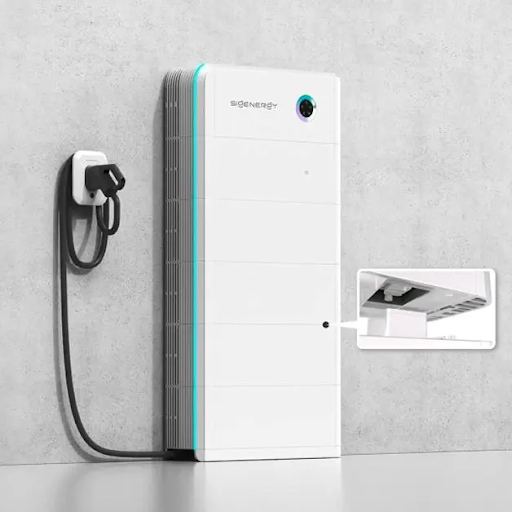
The SigenStor 5.0 is a modular DC-coupled battery system built for homes that want scalable, high-performance storage. In a four-module configuration, it delivers 20kWh of total capacity. Its modular design means expansion is straightforward if your energy needs grow.
| Feature | Specification |
Performance Warranty |
10 years |
Product Warranty |
10 years |
Workmanship Warranty |
5 years |
Nominal Capacity |
21.52kWh |
Usable Capacity |
20.8kWh |
Depth of Discharge (DoD) |
100% |
Phase Compatibility |
Single Phase and Three Phase |
Blackout Protection |
Yes |
App + App Features |
MySigen
|
IP Rating |
IP 66 |
Maximum Expandable Capacity |
48kWh |
Capacity note: The SigenStor nominal capacity reflects the total energy stored in the LiFePO4 cells under laboratory conditions. The usable capacity is approximately 3% lower, as the BMS reserves a small buffer at each end of the charge curve to protect cell longevity. The 100% DoD rating applies to the usable capacity window, not the nominal figure.
Anker Solix X1 - 20kWh (4 modules)
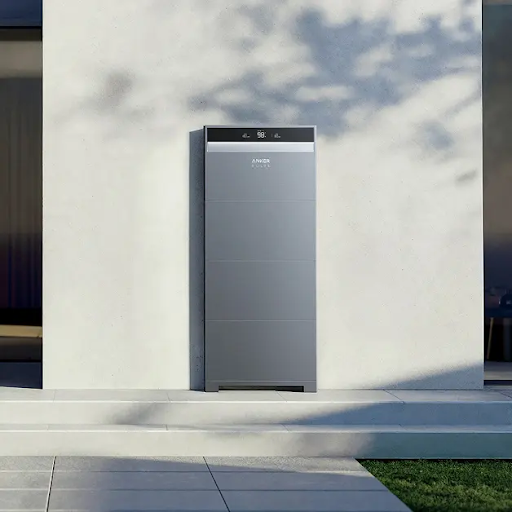
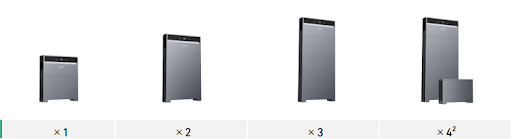
The Anker Solix X1 brings a four-module approach to 20kWh of storage with a focus on smart energy management and a strong app experience. Built with LFP chemistry for long cycle life, it suits households wanting responsive monitoring alongside reliable storage.
| Feature | Specification |
Performance Warranty |
10 years |
Product Warranty |
10 years |
Workmanship Warranty |
5 years |
Nominal Capacity |
20kWh |
Usable Capacity |
20kWh (approx.) |
Depth of Discharge (DoD) |
100% |
Phase Compatibility |
Single Phase |
Blackout Protection |
Yes |
App + App Features |
Anker App
|
IP Rating |
IP 65 |
Maximum Expandable Capacity |
30kWh |
You can draw on nearly all of the Anker SOLIX X1's rated capacity. This is made possible through LiFePO4 chemistry and other strategic design choices, to support a very high depth of discharge.
Growatt ALP LV - 20kWh (4 modules)
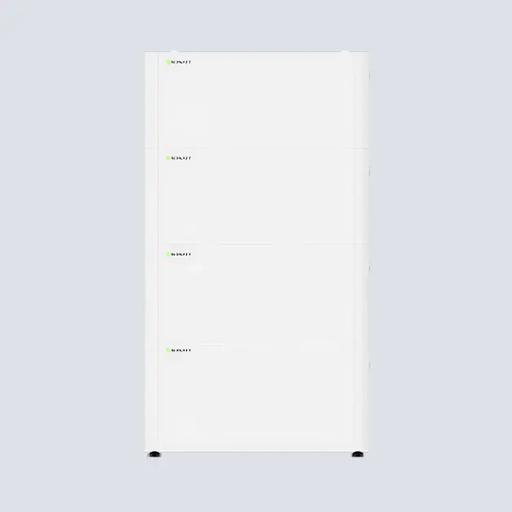
The Growatt ALP LV is a cost-competitive modular LFP battery system that integrates with Growatt hybrid inverters. At 20kWh across four modules, it is a practical option for households already running Growatt solar equipment or looking for strong value at this capacity.
| Feature | Specification |
Performance Warranty |
10 years |
Product Warranty |
10 years |
Workmanship Warranty |
5 years |
Nominal Capacity |
20kWh |
Usable Capacity |
18.4kWh |
Depth of Discharge (DoD) |
90 - 92% |
Phase Compatibility |
Single Phase |
Blackout Protection |
Add On |
App + App Features |
ShinePhone, Shiner App or ShineTools
|
IP Rating |
IP 65 |
Maximum Expandable Capacity |
30kWh |
Alpha ESS Smile B3 Plus - 20.16kWh (4 modules)
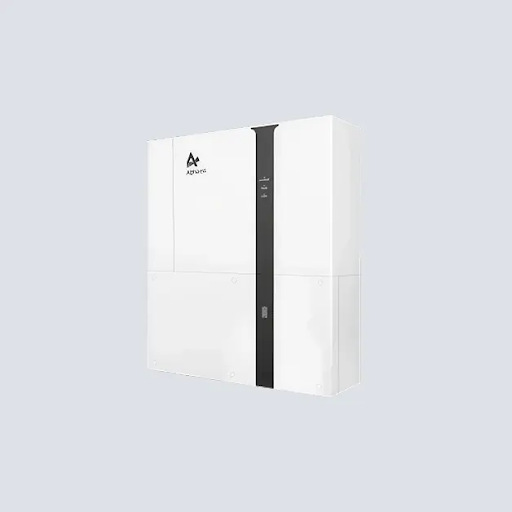
Building on the proven Smile B3 platform, the B3 Plus expands to 20.16kWh across four modules. With a 95% depth of discharge, you access approximately 19.16kWh usable per cycle, impressively close to the full rated capacity. Its seamless UPS backup capability switches to battery power in milliseconds during a blackout, and the LFP chemistry delivers safe, long-lived daily cycling. Backed by a 10-year battery performance warranty underwritten by Munich Re.
| Feature | Specification |
Performance Warranty |
10 years |
Product Warranty |
5 years (extended warranty optional) |
Workmanship Warranty |
5 years |
Nominal Capacity |
20.16kWh |
Usable Capacity |
19.16kWh |
Depth of Discharge (DoD) |
95% |
Phase Compatibility |
Single Phase |
Blackout Protection |
Add On |
App + App Features |
Alphacloud
|
IP Rating |
IP 65 / IP 21 |
Maximum Expandable Capacity |
30.24kWh |
Alpha ESS Smile5 10.1 - 20.2kWh (2 modules)
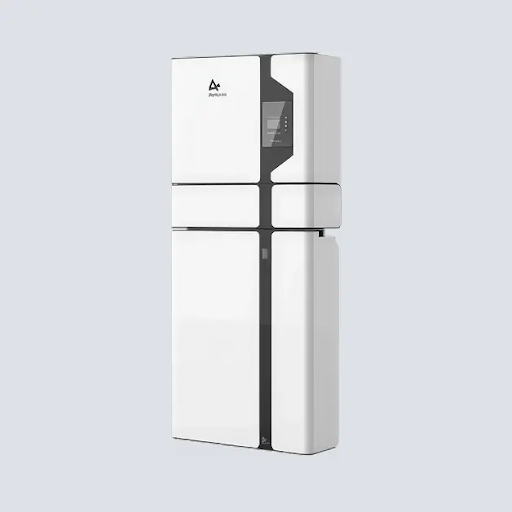
The Smile5 10.1 reaches 20.2kWh in just two modules, making it a space-efficient option for households wanting large storage without a bulky installation footprint. With dual MPPT inputs and a built-in hybrid inverter, it manages solar generation, battery storage, and home supply in one cohesive system, minimising components and simplifying the install.
SMILE-BAT-10.1P (2 modules)
| Feature | Specification |
Performance Warranty |
10 years |
Product Warranty |
5 years (extended warranty optional) |
Workmanship Warranty |
5 years |
Nominal Capacity |
20.2kWh |
Usable Capacity |
19.4kWh |
Depth of Discharge (DoD) |
95% |
Phase Compatibility |
Single Phase |
Blackout Protection |
Add On |
App + App Features |
Alphacloud
|
IP Rating |
IP 65 / IP 21 |
Maximum Expandable Capacity |
60.6kWh |
Alpha ESS Smile G3 - 20.2kWh (2 modules)
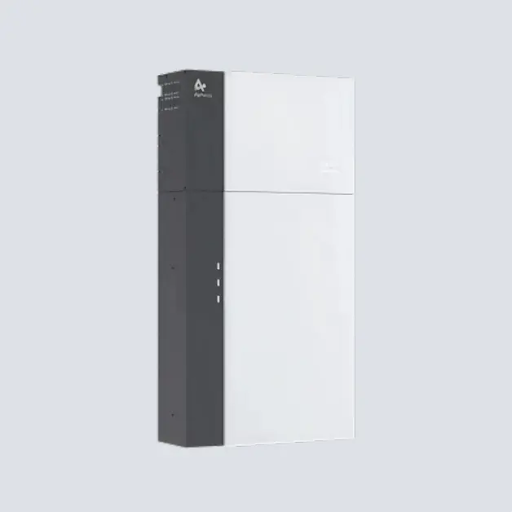
The Alpha ESS Smile G3 in a two-module configuration delivers 20.2kWh of total storage with a 96% depth of discharge, giving roughly 19.4kWh usable per cycle. Its 60A charge and discharge current means it absorbs daytime solar efficiently and delivers stored energy smoothly during peak evening demand. Backed by Munich Re's 10-year battery performance warranty guaranteeing at least 80% of original usable capacity for a decade.
SMILE-G3-B5 (2 modules)
| Feature | Specification |
Performance Warranty |
10 years |
Product Warranty |
5 years (extended warranty optional) |
Workmanship Warranty |
5 years |
Nominal Capacity |
20.2kWh |
Usable Capacity |
19.2kWh |
Depth of Discharge (DoD) |
95% |
Phase Compatibility |
Single Phase |
Blackout Protection |
Add On |
App + App Features |
Alphacloud
|
IP Rating |
IP 65 / IP 21 |
Maximum Expandable Capacity |
60.5kWh |
Ambrion Raybox HS2 - 20.48kWh (2 modules)
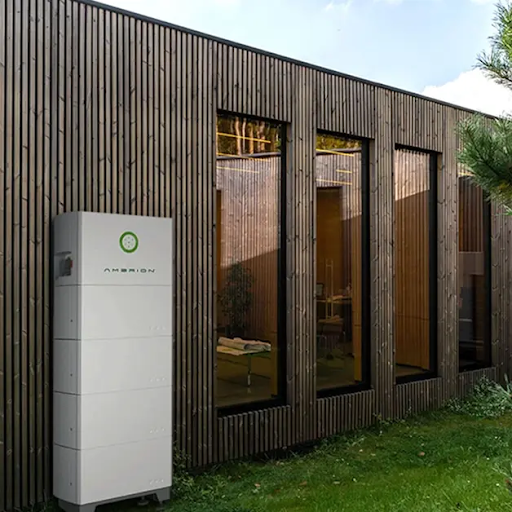
The Ambrion Raybox HS2 arrives at 20.48kWh across two modules, putting it at the top of the 20kWh class in terms of headline capacity. It is a strong option for households wanting to maximise storage in a compact, two-unit footprint, with robust LFP chemistry and a focus on Australian conditions.
| Feature | Specification |
Performance Warranty |
10 years |
Product Warranty |
10 years |
Workmanship Warranty |
5 years |
Nominal Capacity |
20kWh |
Usable Capacity |
18kWh |
Depth of Discharge (DoD) |
90% |
Phase Compatibility |
Single Phase |
Blackout Protection |
Add On |
App + App Features |
SolarPlant
|
IP Rating |
IP 65 / IP 21 |
Maximum Expandable Capacity |
60.5kWh |
All products (including batteries) installed by Solar Battery Group are covered by a 5-year workmanship warranty, starting from the date of the original installation.
Not sure which battery suits your home? Use our comparison tool to filter by capacity, warranty, blackout protection and IP rating across all the brands we stock.
How Much Does a 20kWh Solar Battery Cost in Australia?
For most households, a complete 20kWh solar battery installation will generally land somewhere in the range of $17,960 to $26,000 or more before incentives are applied, depending on the product, installation complexity, and site requirements.
After the Government's Cheaper Home Batteries Program rebate, the effective price range narrows considerably for eligible installations. However, because a 20kWh battery sits above the 14kWh tier threshold in the updated rebate structure, it is important to understand exactly how the rebate is calculated for this capacity.
What Moves the Price?
- Battery model and build quality: LFP chemistry, warranty length, and brand support all factor in
- Retrofit vs. new installation: adding a battery to an existing solar system often requires additional inverter or gateway hardware
- Switchboard upgrades and compliance work: older switchboards or limited space can add meaningful cost
- Backup capability: full home backup costs more than a critical-loads setup
- Site specifics: access, location, and regional labour costs all play a role
When comparing quotes, the battery capacity figure is not the whole story. Two quotes at 20kWh can look very different once you account for what is and is not included.
How the Federal Rebate Works for a 20kWh Battery
This is where 20kWh buyers need to pay close attention. The updated Cheaper Home Batteries Program, effective from May 1, 2026, introduced a tiered STC structure for solar batteries that treats capacity above 14kWh differently.
The Tiered STC Structure
| Capacity Range | STC Factor Applied |
0-14kWh (inclusive) |
100% |
14-28kWh (inclusive) |
60% |
28-50kWh (inclusive) |
15% |
For a 20kWh battery, your rebate is calculated across two tiers:
- The first 14kWh receives the full STC Factor at 100%
- The remaining 6kWh (from 14 to 20kWh) only attracts STCs at 60% of the Factor
This is a more meaningful penalty than for a 16kWh system, which has only 2kWh above the threshold. For a 20kWh battery, 6kWh, or 30% of the total capacity, earns a reduced rebate rate.
The STC Factor Is Also Dropping Twice as Fast
From May 2026, the STC Factor for home batteries drops every six months in January and July, rather than annually. The Factor has already moved from 8.4 to 6.8 as of May 2026 and will continue declining through to 2030.
For reference, the expected rebate per kWh for the first 14kWh is projected as follows:
| Period | Rebate per kWh (first 14kWh) |
May-Dec 2026 |
~$272 |
Jan-Jun 2027 |
~$228 |
Jul-Dec 2027 |
~$208 |
Jan-Jun 2028 |
~$184 |
Jul-Dec 2028 |
~$164 |
Jan-Jun 2029 |
~$144 |
Jul-Dec 2029 |
~$124 |
Jan-Jun 2030 |
~$104 |
Jul-Dec 2030 |
~$84 |
Source: Choice. Note: approximately 10% admin fees are commonly deducted, and these per-kWh rates apply only to the first 14kWh of a battery at the full STC Factor. The 6kWh above 14kWh in a 20kWh system earns rebate at 60% of these figures.
Despite the tiered reduction, the rebate for a 20kWh battery remains meaningful. For households that genuinely need the capacity, the extra storage often justifies the reduced incremental rebate on the upper 6kWh.
For tailored rebate calculations based on your installation, speak with the Solar Battery Group team on 1300 223 224.
What to Look For in a 20kWh Battery System
The fundamentals always come first.
Battery chemistry: Most quality home batteries now use LFP (Lithium Iron Phosphate). It has a strong safety profile, handles deep and frequent daily cycling well, and ages more gracefully than older lithium chemistries. At 20kWh, where the battery is working hard every single day, chemistry is not a trivial consideration.
Depth of discharge: Compare usable capacity, not nominal. A 20kWh battery with 90% DoD delivers meaningfully less real-world value than one with 96% DoD, regardless of the spec sheet headline. Over a decade of daily cycling, that difference compounds.
Round-trip efficiency: Energy in versus energy out. Higher round-trip efficiency means more of what your solar system generates actually reaches your appliances. Check this figure when comparing products.
Warranty details: Ten years on battery performance is the benchmark. Read what is actually guaranteed, including the percentage of original capacity the manufacturer commits to at year ten and what happens if the battery falls short. Compensation terms vary enormously between brands. Warranties backed by a major reinsurer such as Munich Re offer an additional layer of confidence.
Backup capability: Not all 20kWh systems include backup as standard. Some treat it as an opt-in add-on with additional cost. Others require extra switchboard work or a gateway device. Know exactly what is in scope before you accept a quote.
CEC approval and installer accreditation: Non-negotiable. The battery must be approved for installation in Australia by the Clean Energy Council. Your installer must be accredited by Solar Accreditation Australia. Both matter for rebate eligibility and the safety of the installation.
Expandability: If there is any chance you will want more storage in three to five years, such as a second EV, a home extension, or a growing business, ask specifically about modular expansion. What are the limits? What is compatible? What does it actually cost to add capacity later?
Inverter compatibility: Some 20kWh batteries come with integrated hybrid inverters that handle both solar and battery in one system. Others are designed to work alongside your existing solar inverter. Confirm compatibility before committing.
Why Size Can Matter More Than Brand
A premium brand in an undersized battery will run flat before midnight on a heavy evening. A well-built system sized to your actual demand will not. That gap matters more than the logo.
For households with above-average consumption - larger homes, high air conditioning use, an EV charging overnight, or guests staying regularly - 20kWh is not oversizing. It is covering the evening peak, holding a backup reserve, and absorbing the variation between a quiet Tuesday and a summer Saturday. No amount of brand reputation makes up for kilowatt-hours you do not have.
That said, capacity is only the right call when it matches real usage. The households that overbuy are not better protected; they are just carrying costs they do not need. The ones that underbuy, on the other hand, almost never wish they had chosen a fancier brand. They wish they had gone bigger.
If your household genuinely needs 20kWh, you have already made the right call on size. Now choose the manufacturer that backs it with the warranty terms, the chemistry, and the installer support to make it last.
When evaluating manufacturers, look past marketing and check the things that actually protect you over a ten-year horizon: whether the warranty is backed by a creditworthy third party rather than the manufacturer's own balance sheet, whether the company has a track record of honouring claims in Australia, whether parts and firmware support are available locally, and whether the Clean Energy Council has approved the product for installation. Financial backing, claims history, local support, and CEC listing are more meaningful guides to a quality manufacturer than production scale or brand recognition alone.
Is a 20kWh Solar Battery Right for You?
For the right household or business, yes, without reservation.
If you use significant power after sunset, if you have an EV or are about to, if your daily consumption sits at 25kWh or above, or if genuine energy independence is a priority rather than an aspiration, 20kWh is not oversized. It is appropriate.
This decision should be based on your actual usage data, not national averages. Smart meter data is your best starting point, and an experienced installer who reviews your numbers rather than just your suburb is the right next step.
Why Solar Battery Group
Solar Battery Group is Australia's largest solar battery installer, operating nationwide with over 26,000 battery installations completed and more than 30 years of industry experience. Every installer on our team is CEC or SAA accredited, and we carry only CEC-approved products.
Whether you are looking to retrofit a 20kWh battery onto an existing solar system, pair it with a new solar installation, or simply want a straight comparison of your best options at this capacity, our team works from your real usage data to recommend the right system for your home or business.
For a tailored recommendation on a 20kWh solar battery, call the team directly on 1300 223 224 or ask us for a free quote.