


A practical guide to choosing a 30kWh capacity solar battery in Australia
There is a particular type of Australian household that ends up here. It is not the couple in a two-bedroom unit who watched a YouTube video about solar. It is the family whose electricity bill reads like a small business expense. The home where two EVs are charging in the garage, the ducted air conditioning runs until 11pm, and someone replaced the gas hot water system last summer. The household that looked at a 20kWh battery, did the evening maths, and immediately wondered if it was enough.
If that sounds familiar, keep reading. This guide is written for you.
30kW vs 30kWh: What is the Difference?
Before anything else, this is worth sorting out because searches for "30kW solar battery" and "30kW battery" are almost always from people who mean a 30kWh solar battery.
A 30kW solar system refers to peak power output. That is how much electricity the panels can produce per hour under ideal conditions. A 30kWh solar battery is about storage: specifically, how much energy it can hold and release over time.
One measures rate. The other measures volume.
Think of it like a water tank. Kilowatts describe how fast water flows through the pipe. Kilowatt-hours describe how much the tank holds. You would not measure your tank in flow rate, and you would not measure your battery in kilowatts.
Every reference to capacity in this guide means 30kWh of stored energy. That is what people shopping for home battery storage are actually after.
What is a 30kWh Solar Battery?
Most households buying solar batteries in Australia land somewhere between 10 and 20kWh. A 30kWh system is a deliberate step beyond that, and the reasons people take it vary.
Some have already installed a smaller battery, watched it empty by 9pm, and are sizing up on their next purchase. Others are planning ahead, accounting for the second EV they will buy in two years or the gas appliances they plan to replace before the end of the decade. A smaller group is driven by energy independence in a more philosophical sense, wanting to run a home on sunshine and stored sunlight and reduce their reliance on grid infrastructure they do not trust.
Whatever the motivation, the capacity itself is significant.
According to the Australian Energy Regulator's Residential Energy Consumption Benchmarks, the average household of two to three people uses somewhere between 15 and 21kWh per day. A 30kWh battery holds more stored energy than that entire daily average, with capacity left over for backup, morning loads before solar generation kicks in, and the unexpectedly heavy days that every household eventually has.
The broader market has been trending this way. Before the Cheaper Home Batteries Program launched in July 2025, the typical Australian battery installation was 10 to 12kWh. The rebate changed the economics. Average installation capacity across the program's first six months jumped to 23.12kWh, and Canstar data puts Q4 2025 alone at 26.8kWh. Buyers who were always going to choose larger systems were waiting for the financial case to support the decision. For many, it now does.
At 30kWh specifically, the rebate structure adds a layer of nuance worth understanding before you get to the price section of this guide. Three tiers apply:
- The first 14kWh attracts the full STC Factor
- From 14 to 28kWh, the Factor drops to 60%
- From 28 to 50kWh, it falls to just 15%
For a 30kWh battery, only 2kWh sits in that bottom tier. The remaining 28kWh qualifies under the first two tiers, where the rebate still carries real weight.
Who Actually Needs 30kWh of Storage?
This question matters more than it might seem. Buying too much battery is a real mistake, just a less visible one than buying too little.
The households and properties where 30kWh consistently makes sense share a few common traits.
High daily consumption. If your household runs through 35kWh or more on a typical day, 30kWh of storage gives you genuine overnight coverage without borrowing from the grid at peak rates. Below that threshold, a 20kWh system will often suffice.
Two or more electric vehicles. A single EV charging overnight might add 10 to 15kWh to your nightly draw. Two EVs can push that past 25kWh on its own, before the rest of the household has turned a light on.
Full electrification, no gas. Households that have replaced gas heating, hot water, and cooking with electric alternatives see a step change in consumption that often surprises people. Induction cooktops, heat pump hot water, and reverse-cycle heating all add up. Without gas as a fallback for high-demand periods, the battery needs to cover more.
Businesses with overnight operations. Small commercial properties, workshops, or home-based businesses running equipment outside solar hours can find 30kWh of storage changes the economics of their energy use significantly.
Properties with limited grid reliability. In areas where outages are common or voltage fluctuations are a problem, a larger battery provides a more substantial buffer than smaller residential systems.
If you are not in one of these categories, read through the sizing section before committing. A smaller system might serve you just as well at a meaningfully lower cost.
Ready to size up? Tell us about your home, your solar setup and how much power you burn through. We'll match you to a 30kWh system built for it, or find the configuration that fits you even better.
Do You Actually Get the Full 30kWh Out of a 30kWh Solar Battery?
In most cases, no. And knowing the reasons why is how you make a genuinely informed comparison between products.
The advertised figure is nominal capacity. Three factors determine how much of that reaches your appliances on any given day.
Depth of Discharge
Depth of discharge (DoD) is the percentage of the battery's stored energy that can actually be used in each cycle. A 30kWh battery with 90% DoD delivers 27kWh. The same battery at 96% DoD delivers 28.8kWh.
That 1.8kWh gap per cycle sounds modest. Across 3,650 daily cycles over a decade, it represents more than 6,500kWh of missing energy, roughly a year's worth of consumption for a modest household.
Here is how the numbers play out across common DoD ratings:
| Depth of Discharge | Usable Capacity per Cycle |
90% |
27.0kWh |
92% |
27.6kWh |
95% |
28.5kWh |
96% |
28.8kWh |
100% |
30.0kWh (theoretical) |
A product claiming 100% DoD deserves scrutiny. Most manufacturers recommend retaining a small reserve to protect cell longevity and maintain warranty validity. Check what the warranty actually requires before drawing on the full rated capacity.
Round-Trip Efficiency
Energy is lost in conversion as it travels from solar panels into the battery, and back out again to your appliances. The loss is typically 5 to 10%, and it compounds with every cycle. AC-coupled systems, where a battery is retrofitted onto an existing solar setup, introduce an additional conversion step that edges the loss slightly higher. Most reputable manufacturers publish a round-trip efficiency figure. It is worth checking before you compare prices.
Backup Reserve
If blackout protection is enabled, a fixed portion of the battery, generally 10 to 20% of total capacity, is held in reserve at all times. That energy is not available for daily use. It exists solely to power your home during a grid outage. Factor it into your usable capacity calculation.
How Long Will a 30kWh Battery Power a House?
This is one of the first things most people want to know, and the answer is genuinely variable depending on your household.
The figure that actually matters is your average power draw in kilowatts, not your total daily consumption in kWh. A home pulling 5kW overnight empties a battery five times faster than one drawing 1kW, regardless of what either electricity bill says.
Using approximately 28.5kWh of usable capacity as the baseline, which is consistent with a modern LFP battery operating at 95% depth of discharge:
| Average Evening Draw | Household Profile | Estimated Runtime |
~1kW |
Small home, lights, fridge, TV |
25+ hours |
~2kW |
Average household, occasional A/C |
12-14 hours |
~3.5kW |
Large family, heavy A/C use |
7-8 hours |
~5kW |
EV charging, pool pump, heat pump |
5-6 hours |
~7kW+ |
Two EVs plus significant household load |
4 hours or less |
Products operating at 90% DoD will sit closer to 27kWh of usable capacity, pulling the lower end of each range down. Your actual experience will land somewhere within these bands depending on the product, your configuration, and how your household behaves on any specific evening.
The most useful number to find before choosing a battery size is your post-5pm average draw, pulled from your inverter or energy monitor, not your daily kWh total from the electricity bill. The two figures can differ significantly, especially in households where most consumption happens during business hours.
Is a 13kW+ Solar System with a 30kWh Battery the Right Pairing?
For most households at this consumption level, yes. The case for it is straightforward.
A 13kW solar system in good conditions can produce 50kWh or more on a clear day. Without meaningful storage, the surplus beyond your daytime consumption gets exported to the grid at feed-in tariffs that have dropped to low single digits across most of Australia. The economics of exporting, once genuinely attractive, no longer make sense for most households.
A 30kWh battery absorbs that surplus and deploys it after sunset. Every kilowatt-hour stored and self-consumed is worth significantly more than the equivalent exported, given current tariff rates.
This pairing makes particular sense for:
- Households running 35kWh or more daily
- Homes with two or more EVs that charge overnight
- Properties with ducted heating and cooling, electric hot water, and pool equipment all running simultaneously
- Fully electrified homes with no gas connection
- Small businesses operating outside solar generation hours
The combination also suits households whose consumption will grow. The second EV arriving next year, the induction cooktop replacing gas, the granny flat going in at the back of the block: these all push demand higher. A well-sized system bought now avoids a retrofit conversation later.
One genuine caution: if your household's actual usage pattern is heavily weighted toward business hours and evenings are genuinely light, a 20kWh battery will often serve you just as well at a lower price. Size to your real consumption data, not to a theoretical peak.
Solar Oversizing for Battery-Paired Systems
Why Generation Headroom Matters More at 30kWh
Pairing 30kWh of storage with a solar array that cannot reliably fill it is an expensive miscalculation. The battery is only as useful as the generation capacity supporting it, and this is where many installations fall short.
The standard recommendation is to size the solar array to produce at least 20% more than your household consumes daily. That buffer accounts for inverter losses, weather variability, shading, and seasonal dips. It is a minimum, not a target.
For a home consuming 40kWh per day, 20% oversizing means targeting at least 48kWh of daily solar production. A 13kW system on a north-facing roof in a high-solar-exposure state can deliver that and more. In Victoria or Tasmania, particularly in winter, the calculation is tighter.
Why a 30kWh Battery Changes the Oversizing Equation
A large battery needs more generation headroom, not just enough to cover daily household consumption, but enough to bring 30kWh of storage back to full on every viable day of the year.
Industry sizing guidance for grid-tied homes with battery storage typically recommends generating 25 to 50% above daily consumption. For properties targeting high autonomy or genuine overnight independence, the upper end of that range is the more reliable target.
A household consuming 40kWh per day and targeting 30kWh of daily battery charging needs its solar array to produce well in excess of 40kWh on good days to build meaningful reserves across variable weather.
The Mismatch That Costs Real Money
A 30kWh battery paired with a 6.6kW solar system will chronically undercharge. In winter, it may never reach capacity. The battery sits half-full, the return on investment stretches out, and the household ends up drawing from the grid during exactly the peak evening hours the battery was bought to cover.
This is not a theoretical risk. It is a common outcome when storage capacity and solar generation are not sized together.
DC Coupling and Oversizing Benefits
Sizing the solar array 20 to 35% above the inverter's AC capacity is standard practice in DC-coupled battery systems. Energy that would otherwise be clipped at the inverter gets redirected into storage. The result is higher overall system efficiency and a battery that reaches full capacity more reliably across varied weather conditions.
How Much Battery Storage Do You Actually Need?
The sizing question does not have a universal answer. What it has is a methodology worth following.
Start with your daily consumption figure. Your electricity retailer or smart meter data will give you this. National averages are irrelevant for this calculation.
- Average Australian household: roughly 16kWh per day
- Larger home with air conditioning, electric hot water, and a pool: 30kWh or more
- Fully electrified household with one or more EVs: 50 to 70kWh or higher daily
Identify your evening load. The hours from roughly 5pm to midnight are where most residential energy costs are concentrated, and where battery storage earns its keep. Your post-sunset draw is the number that actually drives your storage requirement.
Factor in a backup buffer. If outage protection matters, hold 10 to 20% of total capacity in reserve. Reduce your effective evening coverage figure accordingly.
Apply the rule of thumb. Minimum storage = 25% of daily consumption, plus a 2kWh backup buffer.
Worked example for a high-consumption home:
- Daily consumption: 42kWh
- 25% of 42kWh = 10.5kWh
- Add 2kWh backup buffer = 12.5kWh absolute minimum
- Recommended range: 20 to 32kWh
- At 30kWh, you sit near the upper end: strong evening coverage, useful backup headroom, room for future degradation
For households already running at 45kWh or above, 30kWh moves toward the middle of the recommended range rather than the top. Adding a 20 to 25% buffer for long-term capacity fade pushes the target figure higher still. At that consumption level, 30kWh is not a generous choice. It is a considered one.
How Long Will a 30kWh Solar Battery Last?
A quality LFP battery cycled daily under normal operating conditions is a 10-year asset. That is not a sales claim. It is a warranty standard backed by some manufacturers with third-party underwriting from institutions like Munich Re, which attaches genuine financial weight to the promise.
What's the big deal with Munich Re? Munich Re is one of the world's largest and most influential reinsurers. Think of them as the insurer of insurance companies. They are a leading insurer across solar photovoltaic and storage systems.
What shapes whether a battery reaches and exceeds that threshold:
Depth of discharge in daily use. Repeatedly draining to zero accelerates cell degradation. Most manufacturers build their cycle-life ratings around 80 to 90% average DoD. Operating within that range, rather than at the extremes, extends useful life.
Temperature across the installation's lifetime. Heat is the primary enemy of battery longevity. Installations in poorly ventilated spaces in Queensland or northern Australia accumulate thermal stress that equivalent installations in cooler climates do not. If your battery is going on an east-facing wall in full afternoon sun in Brisbane, that is worth discussing with your installer before you choose a product or a location.
Cycle frequency. Daily cycling is expected and designed for use in modern LFP batteries. It is not harmful in itself. What matters is the conditions under which those cycles occur.
What the warranty actually guarantees. A 10-year performance warranty is the floor, not the achievement. Read the document, specifically the guaranteed capacity retention at year ten. Some brands commit to 80% of original usable capacity. Others guarantee 70%. The gap matters at 30kWh: 80% of 28.5kWh usable is 22.8kWh. At 70%, that falls to 19.95kWh. Those are different batteries by year ten. Know which one you are buying.
Comparing Different 30kWh Solar Battery Options
Solar Battery Group stocks nine solutions that reach approximately 30kWh of storage capacity. Each suits different installation configurations, inverter setups, and household priorities.
Tesla Powerwall 3 with Expansion Pack (27kWh)
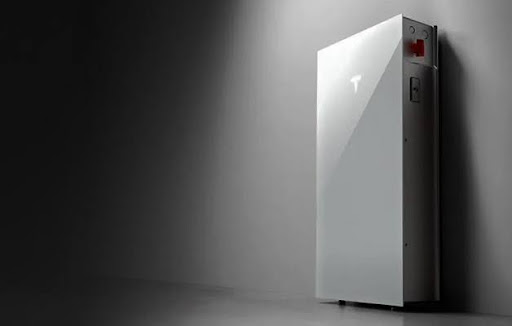
One integrated unit with a built-in inverter, a well-developed app, and a warranty that Tesla stands behind directly. The Powerwall 3 with one expansion pack reaches 27kWh and includes grid-forming blackout protection as standard, without additional switchboard hardware or add-on costs. For households that value simplicity and a single point of accountability from purchase through to warranty claim, it is a strong contender at this capacity.
| Feature | Specification |
Performance Warranty |
10 years |
Product Warranty |
10 years |
Workmanship Warranty |
5 years |
Nominal Capacity |
28kWh |
Usable Capacity |
27kWh |
Phase Compatibility |
Single Phase |
Blackout Protection |
Yes (included) |
App + App Features |
Tesla App
|
IP Rating |
IP67 |
Fox ESS EQ4800 (27.96kWh / 6 modules)
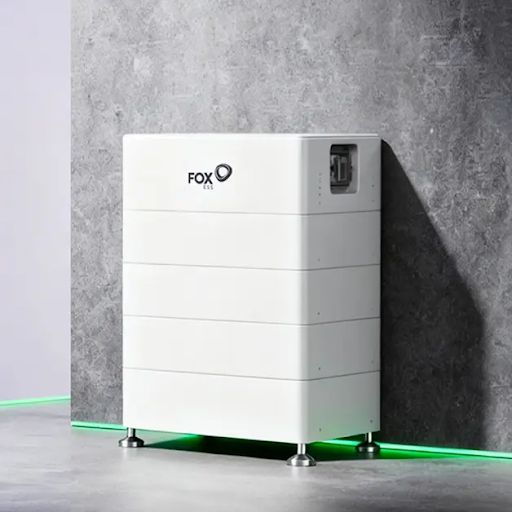
The Fox ESS EQ4800 is built for flexibility. At 27.96kWh across six modules, it suits households that want modular LFP storage with broad inverter compatibility, or those anticipating further capacity expansion. A strong option where the existing solar setup constrains which batteries can be used.
| Feature | Specification |
Performance Warranty |
10 years |
Product Warranty |
10 years |
Workmanship Warranty |
5 years |
Nominal Capacity |
27.96kWh |
Usable Capacity |
27.96kWh |
Depth of Discharge (DoD) |
100% |
Phase Compatibility |
Single Phase and Three Phase |
Blackout Protection |
Yes |
App + App Features |
FoxCloud 2.0
|
IP Rating |
IP65 |
Alpha ESS Smile B3 Plus (30.24kWh / 6 modules)
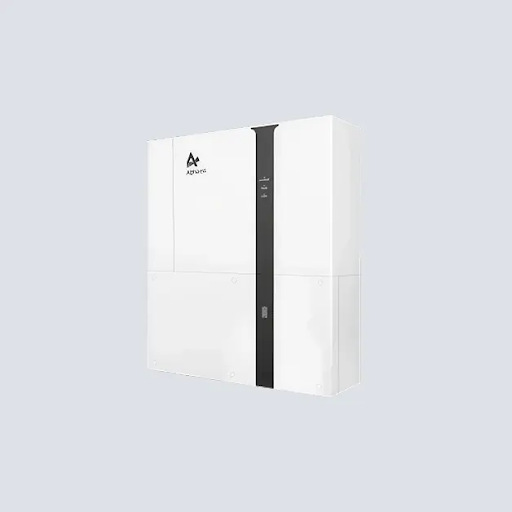
With six modules of the Smile B3 Plus, you get 30.24kWh and a depth of discharge between 95 and 96%. At those DoD figures, usable capacity per cycle sits at approximately 29kWh, one of the highest real-world delivery rates available at this nominal capacity. The UPS-grade backup switches the home to battery power in milliseconds, not seconds. LFP chemistry handles daily cycling without meaningful degradation over a decade of use. The 10-year performance warranty carries Munich Re backing.
| Feature | Specification |
Performance Warranty |
10 years |
Product Warranty |
5 years (extended warranty optional) |
Workmanship Warranty |
5 years |
Nominal Capacity |
30.24kWh |
Usable Capacity |
28.74kWh |
Depth of Discharge (DoD) |
95-96% |
Phase Compatibility |
Single Phase |
Blackout Protection |
Add On |
App |
Alphacloud
|
IP Rating |
IP65 / IP21 |
Anker Solix X1 (30kWh / 6 modules)
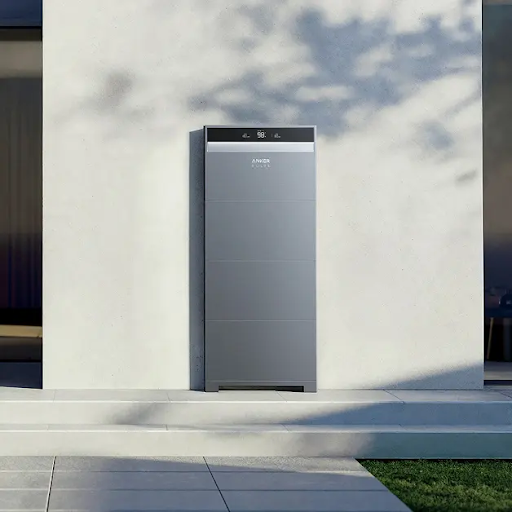
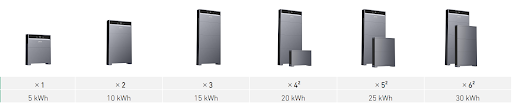
The Anker Solix X1 at six modules is one of the few options in this class claiming 100% depth of discharge, which means the full 30kWh of rated capacity is theoretically accessible each cycle. LFP chemistry underpins the long cycle life. The Anker app covers real-time monitoring, usage breakdowns by day, week, and month, and pattern analysis for ongoing optimisation. For households where maximising daily usable storage is the primary consideration, this is worth a close look.
| Feature | Specification |
Performance Warranty |
10 years |
Product Warranty |
10 years |
Workmanship Warranty |
5 years |
Nominal Capacity |
30kWh |
Usable Capacity |
30kWh (approx.) |
Depth of Discharge (DoD) |
100% |
Phase Compatibility |
Single Phase |
Blackout Protection |
Yes |
App |
Anker App
|
IP Rating |
IP65 |
Maximum Expandable Capacity |
30kWh |
Sigenergy SigenStor 5.0 (30kWh / 6 modules)
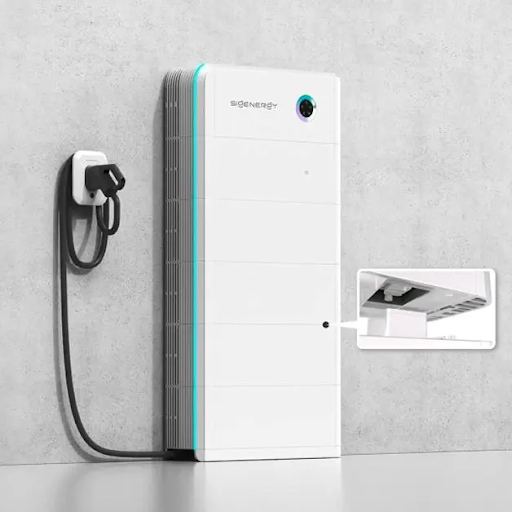
The SigenStor 5.0 brings AI-assisted energy management to a six-module, 30kWh configuration. The MySigen app goes beyond monitoring: it learns household consumption patterns, optimises when to charge and discharge against time-of-use tariffs, and provides live energy flow visualisation across solar, battery, and EV charging simultaneously. Three-phase compatibility and a 48kWh expansion ceiling give it long-term relevance for households whose consumption is still climbing.
| Feature | Specification |
Performance Warranty |
10 years |
Product Warranty |
10 years |
Workmanship Warranty |
5 years |
Nominal Capacity |
32.28kWh |
Usable Capacity¹ |
31.2kWh |
Depth of Discharge (DoD) |
100% |
Phase Compatibility |
Single Phase and Three Phase |
Blackout Protection |
Yes |
App + App Features |
MySigen
|
IP Rating |
IP66 |
Maximum Expandable Capacity |
48kWh |
¹ Capacity note: The SigenStor nominal capacity (5.38 kWh / 8.06 kWh) reflects the total energy stored in the LiFePO4 cells under laboratory conditions. The usable capacity (5.2 kWh / 7.8 kWh) is approximately 3% lower, as the BMS reserves a small buffer at each end of the charge curve to protect cell longevity. The 100% DoD rating applies to the usable capacity window, not the nominal.
Sigenergy SigenStor 8.0 (32kWh / 4 modules)
The SigenStor 8.0 reaches 32kWh in four modules instead of six. That is a meaningful difference for homes where installation space is a genuine constraint. Higher per-module capacity reduces the wall footprint without reducing storage, and full blackout protection comes included rather than as an add-on. Three-phase compatibility makes it broadly applicable. For households that want maximum storage in a compact installation profile, this is the standout option at this capacity level.
| Feature | Specification |
Performance Warranty |
10 years |
Product Warranty |
10 years |
Workmanship Warranty |
5 years |
Nominal Capacity |
32.24kWh |
Total Capacity¹ |
31.2kWh |
Depth of Discharge (DoD) |
100% |
Phase Compatibility |
Single Phase and Three Phase |
Blackout Protection |
Yes |
App |
MySigen
|
IP Rating |
IP66 |
¹ Capacity note: The SigenStor nominal capacity (5.38 kWh / 8.06 kWh) reflects the total energy stored in the LiFePO4 cells under laboratory conditions. The usable capacity (5.2 kWh / 7.8 kWh) is approximately 3% lower, as the BMS reserves a small buffer at each end of the charge curve to protect cell longevity. The 100% DoD rating applies to the usable capacity window, not the nominal.
Growatt ALP LV (30kWh / 6 modules)
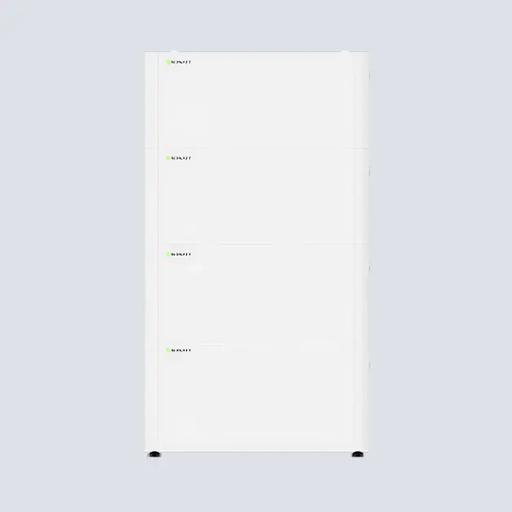
The Growatt ALP LV is the practical choice for households already running Growatt inverter hardware, or for buyers where upfront cost is the deciding variable. At 30kWh across six modules with a 90 to 92% DoD, usable capacity sits at approximately 27 to 27.6kWh. It does not lead the field on usable capacity per cycle, but it offers a competitive price point and strong Growatt ecosystem integration. Backup protection is available as an add-on.
| Feature | Specification |
Performance Warranty |
10 years |
Product Warranty |
10 years |
Workmanship Warranty |
5 years |
Nominal Capacity |
30kWh |
Usable Capacity |
~27.6kWh |
Depth of Discharge (DoD) |
90-92% |
Phase Compatibility |
Single Phase |
Blackout Protection |
Add On |
App |
ShinePhone / Shiner App / ShineTools |
IP Rating |
IP65 |
Maximum Expandable Capacity |
30kWh |
Alpha ESS Smile5 10.1 (30.3kWh / 3 modules)
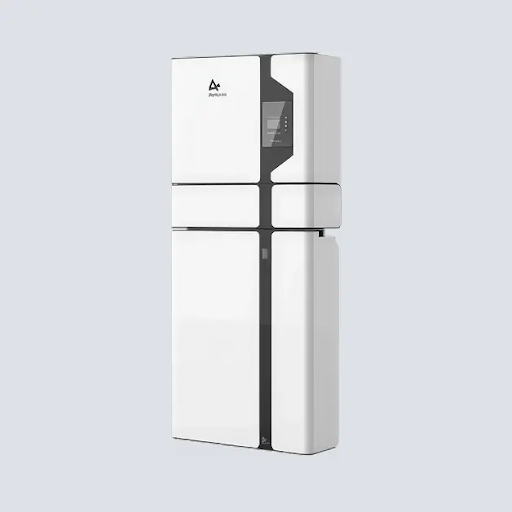
Three modules to reach 30.3kWh is one of the more space-efficient achievements at this capacity class. The Smile 5 10.1 suits homes with limited installation wall space, or installations where a minimal module count simplifies the job. Alpha ESS warranty terms and LFP chemistry give it the longevity profile you should expect at this price point. Backup is an add-on.
| Feature | Specification |
Performance Warranty |
10 years |
Product Warranty |
5 years (extended warranty optional) |
Workmanship Warranty |
5 years |
Nominal Capacity |
30.3kWh |
Depth of Discharge (DoD) |
95% |
Phase Compatibility |
Single Phase |
Blackout Protection |
Add On |
App |
Alphacloud |
IP Rating |
IP65 / IP21 |
Alpha ESS Smile G3 (30.3kWh / 3 modules)
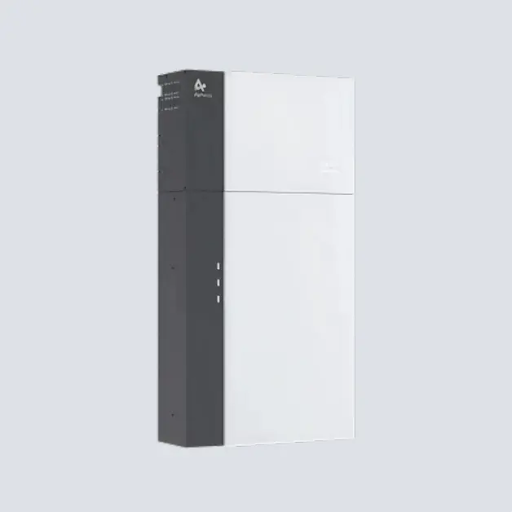
The Smile G3 at three modules delivers 30.3kWh nominal with a 96% depth of discharge, landing at approximately 29.1kWh usable per cycle. Its 60A charge and discharge current rate means it absorbs a strong solar afternoon quickly and dispatches stored energy evenly across the evening peak without throttling. The Munich Re-underwritten warranty guarantees at least 80% of original usable capacity at the ten-year mark. For households that want high usable capacity, fast charge acceptance, and a warranty backed by an institution rather than a balance sheet, the G3 at this configuration is worth serious consideration.
| Feature | Specification |
Performance Warranty |
10 years |
Product Warranty |
5 years (extended warranty optional) |
Workmanship Warranty |
5 years |
Nominal Capacity |
30.3kWh |
Usable Capacity |
~29.1kWh |
Depth of Discharge (DoD) |
96% |
Phase Compatibility |
Single Phase |
Blackout Protection |
Add On |
App + App Features |
Alphacloud
|
IP Rating |
IP65 / IP21 |
Maximum Expandable Capacity |
60.5kWh |
All products installed by Solar Battery Group include a 5-year workmanship warranty from the date of installation.
Not sure which battery suits your home? Use our comparison tool to filter by capacity, warranty, blackout protection and IP rating across all the brands we stock.
How Much Does a 30kWh Solar Battery Cost in Australia?
A fully installed 30kWh battery system typically lands between $26,940 and $39,000 before incentives.
That range is wide because it covers meaningfully different situations: a three-module retrofit onto a recent hybrid inverter setup at one end, and a six-module full installation with switchboard upgrades, three-phase configuration, and full home backup at the other.
After the federal rebate, the effective price narrows, but how much depends on which product you choose, your installation specifics, and the month you install.
What Actually Drives the Price
No two 30kWh quotes will look identical. The variables that matter most:
Chemistry and warranty quality. There is a real price difference between LFP batteries carrying Munich Re-backed warranties and products where the manufacturer is the only party standing behind the guarantee. That difference reflects genuine risk, not just marketing.
Module count and installation time. A six-module system takes longer to install than a three-module system at the same nominal capacity. Labour is not a trivial line item at this scale.
Switchboard compliance. Older switchboards often need upgrading before a battery installation can proceed. In some homes, this adds $1,500 to $3,000 or more before the battery itself goes on the wall.
Backup configuration. Full home backup requires additional hardware in most installations. Critical-loads-only backup costs less. No backup costs the least. Know which option is included in any quote before comparing prices.
Site access and location. A single-storey home with easy garage wall access in metropolitan Sydney is a different job to a rural Queensland property with a complex roof layout. Regional labour rates and access conditions are legitimate cost variables.
If a quote looks significantly cheaper than the range above, the right question is not "why is this company so affordable?"
It is "what has been left out?"
How the Federal Rebate Works for a 30kWh Battery
The updated Cheaper Home Batteries Program, effective from 1 May 2026, applies a three-tier STC structure to solar battery installations. Understanding how those tiers interact at 30kWh is important because this capacity straddles two tier boundaries.
How the Tiers Apply to a 30kWh Battery
| Capacity Range | STC Factor Applied |
0-14kWh |
100% |
14-28kWh |
60% |
28-50kWh |
15% |
A 30kWh battery earns its rebate across all three tiers:
- 14kWh at the full Factor
- 14kWh at 60% of the Factor
- 2kWh at 15% of the Factor
The critical insight is that only 2kWh sits in the weakest tier. That is the same 2kWh above the 28kWh natural ceiling of the second tier. The other 28kWh of the system earns rebate at rates that are still meaningful, especially in the current STC Factor window.
For comparison, a 28kWh battery avoids the bottom tier entirely. Choosing 30kWh means knowingly accepting a lower rebate rate on those final 2kWh, which is a reasonable trade for households whose consumption genuinely calls for the extra capacity. For households on the fence between 28 and 30kWh, the rebate structure is a genuine factor in the comparison.
The STC Factor Is Falling Faster Than It Used To
From May 2026, the Factor drops every six months rather than annually. As of May 2026, the Factor has already moved from 8.4 to 6.8 and will continue declining through to 2030.
Projected rebate per kWh on the first 14kWh:
| Period | Rebate per kWh (first 14kWh) |
May-Dec 2026 |
~$272 |
Jan-Jun 2027 |
~$228 |
Jul-Dec 2027 |
~$208 |
Jan-Jun 2028 |
~$184 |
Jul-Dec 2028 |
~$164 |
Jan-Jun 2029 |
~$144 |
Jul-Dec 2029 |
~$124 |
Jan-Jun 2030 |
~$104 |
Jul-Dec 2030 |
~$84 |
Source: Choice. Approximately 10% admin fees are commonly deducted. The 14kWh between 14 and 28kWh attracts 60% of these figures. The 2kWh above 28kWh attracts 15%.
The rebate window is real and it is closing incrementally. For households who are genuinely going to buy a 30kWh battery in the next two years, the financial case for installing sooner rather than later is straightforward.
For a precise rebate calculation based on your installation, call the Solar Battery Group team on 1300 223 224.
What to Look For in a 30kWh Battery System
A 30kWh battery installation represents a 10-year-plus financial commitment. At this scale, the evaluation criteria deserve more rigour than a brand comparison or a price-per-kWh calculation.
Battery chemistry. LFP (Lithium Iron Phosphate) is the correct chemistry for a residential battery cycling daily over a decade. Its thermal stability under sustained load, resistance to capacity fade under deep discharge, and well-documented safety profile make it the appropriate choice at this capacity. NMC and other lithium chemistries degrade faster under the daily cycling patterns a large home battery experiences. At 30kWh, chemistry is not a secondary consideration.
Usable capacity, not nominal. Every battery in this guide is described by its nominal rating. What matters operationally is usable capacity after depth of discharge is applied. A 30kWh battery at 90% DoD delivers 27kWh per cycle. At 96% DoD, that rises to 28.8kWh. That 1.8kWh difference compounds across 3,650 daily cycles to more than 6,500kWh over ten years: a meaningful gap in lifetime energy delivered that a nominal comparison entirely obscures.
Round-trip efficiency. The percentage of energy that survives the full conversion cycle from solar array to battery to appliance. Losses of 5 to 10% are typical, with AC-coupled retrofit systems sitting toward the higher end due to the additional conversion step. At 30kWh of throughput per day, a single percentage point of round-trip efficiency is worth reviewing carefully across competing products.
Warranty structure and financial backing. A 10-year performance warranty is the market standard. The more important question is what it actually guarantees and who is obligated to honour it. Key variables: the minimum capacity retention committed to at year ten (70% and 80% are both common, and the gap is significant at this nominal size), the compensation mechanism if the battery falls short, and whether the warranty is underwritten by a third-party reinsurer such as Munich Re or backed solely by the manufacturer's balance sheet. At an outlay of $26,940 - $39,000 the financial strength of the party standing behind the guarantee is a legitimate evaluation criterion.
Backup protection scope. Blackout protection is not a binary feature. Full home backup, critical-loads-only backup, and no backup represent three materially different products with different hardware requirements, different costs, and different installation complexity. Additionally, switchover speed matters: UPS-grade systems operating in milliseconds keep sensitive electronics and appliances running through an outage without interruption, while systems with slower switchover times cause resets. Confirm exactly what is included in your quote and what it will cost to upgrade if your requirements change.
Expandability. Confirm the maximum supported capacity for the system you are considering and what expansion requires in practice: additional modules only, or new hardware and reinstallation costs. Some modular systems scale to 60kWh or beyond with straightforward additions. Others are effectively capped at the initial installation capacity.
CEC product approval and installer accreditation. Clean Energy Council product approval and Solar Accreditation Australia installer accreditation are prerequisites for rebate eligibility under the Cheaper Home Batteries Program. They are also the baseline standard for a safe, code-compliant installation. Both should be confirmed before signing any contract.
Why Size Can Matter More Than Brand
There is a temptation, especially at this price point, to anchor on brand. To pay a premium for a name that has been in the market for a decade and has an active community forum and a polished app.
That instinct is not entirely wrong. Brand reputation and claims history do matter, particularly in the Australian market where some international manufacturers have struggled to support warranty obligations at scale.
But a premium brand in the wrong size will still run flat before midnight on a heavy evening. And when it does, the household is drawing from the grid at peak rates despite owning a $30,000 battery system. No warranty replaces kilowatt-hours you do not have.
The households that genuinely regret their battery purchase almost never say they wish they had chosen a different brand. They say they wish they had gone bigger.
The inverse is also true. A household that buys 30kWh for a usage pattern that genuinely only needs 18kWh is carrying costs that will never earn their return. The battery sits two-thirds full every morning and earns nothing from the unused capacity. Oversizing is a different kind of mistake, just a less discussed one.
Size to your real usage data. Then, within the product options that meet your capacity requirement, evaluate chemistry, usable capacity, warranty terms, and manufacturer accountability. That order of priority is the one that holds up over a decade.
Is a 30kWh Solar Battery Right for You?
There is a version of this answer that is easy to give: if you use a lot of power, 30kWh is probably right for you.
The more useful answer requires a harder look.
If your daily consumption reliably exceeds 30kWh, 30kWh of storage covers your overnight draw without much room to spare. At 35kWh and above, it starts to feel genuinely comfortable. At 45kWh and above, you are in the middle of the recommended range rather than at its ceiling.
If you are running two EVs today or plan to add a second within the next two years, the maths tips firmly toward 30kWh over 20kWh. If you are midway through electrifying your home and the gas appliances are coming out over the next 18 months, the demand growth is predictable and worth sizing for now.
If your household consumption is 20 to 25kWh, 30kWh of storage is probably more than you need. A well-sized 20kWh system will serve you better at a lower price, and still capture strong rebate support under the current structure.
The right answer starts with your smart meter data, not a national average. An installer who asks to see your usage profile before recommending a size is the right installer. One who quotes only off your suburb and household occupancy alone is not.
Why Solar Battery Group
Solar Battery Group is Australia's largest solar battery installer. More than 26,000 battery installations completed. More than 30 years of industry experience. A nationwide team where every installer holds CEC or SAA accreditation, and every product on the shelf carries Clean Energy Council approval.
At 30kWh, you are not making a casual purchase. The team at Solar Battery Group works from your actual consumption data to recommend the right system for your home, not the most convenient one to quote.
Whether you are pairing a 30kWh battery with a new solar installation, retrofitting onto an existing system, or comparing specific products side by side at this capacity, the conversation starts with your numbers.
Call 1300 223 224 or request a free quote to get started.