

A practical guide to choosing a very large solar battery in Australia
There is a point where you stop optimising your electricity bill and start designing your energy independence.
For most Australian households, that point is somewhere around 40kWh of storage. At this capacity, you are not shaving the expensive evening peak or covering a quiet overnight. You are running the entire household, including the cars in the garage, through a summer night, then waking up to find the battery still has something left. You are keeping the lights, fridges, and heating on during a multi-day weather event when the grid goes down and neighbours are reaching for candles. You are, in the clearest practical sense, less dependent on the electricity network than you are on your own roof.
That is a real shift. It is also a significant investment, and it deserves careful thought. This guide covers what a 40kWh solar battery is, who it genuinely suits, what it costs in Australia today, how the government rebate applies at this size, and how to compare the seven options Solar Battery Group offers in this range.
40kW vs 40kWh: Clearing Up the Terminology
Searches for "40kW solar battery" and "40kW battery" are almost always from buyers who mean a 40kWh solar battery. The distinction is worth stating clearly because it affects every conversation that follows.
A 40kW solar system describes the peak power output of a solar panel array under ideal conditions. A 40kWh solar battery describes the amount of energy that battery can store and dispatch.
Power is measured in kilowatts. Energy is measured in kilowatt-hours. A battery's job is to store energy, not to describe a generation rate. The relevant figure for home storage is always kWh.
One useful way to think about it: kilowatts describe how fast energy moves, kilowatt-hours describe how much of it exists. A 40kWh battery holds 40 units of stored energy. How fast it charges or discharges is a separate specification, usually expressed in kilowatts of continuous power output.
Everything in this guide refers to 40kWh of storage capacity.
What Does 40kWh of Storage Actually Mean at Home?
To put a 40kWh home battery in context, the AER's Residential Energy Consumption Benchmarks, sourced from Frontier Economics data, place a four-person household at approximately 20kWh per day on average, rising to roughly 25kWh per day for households of five or more. In peak winter periods, five-person households in Queensland are consuming closer to 32kWh per day.
A 40kWh battery holds twice the daily average of a four-person household. For the typical Australian home, that is oversizing. But the typical Australian home is not the customer here.
The base figures from the Frontier Economics data are a starting point, not an endpoint. A five-person Queensland household averaging 25kWh per day adds a single EV charging overnight and immediately sits at 35 to 40kWh of daily demand before accounting for seasonal peaks, a heat pump hot water system, or a pool pump.
Layer those in, and the cumulative overnight requirement climbs quickly:
| Load | Typical Addition |
5+ person household (QLD winter baseline) |
~32kWh |
Single EV charge |
+10-15kWh |
Heat pump hot water |
+3-5kWh |
Pool or spa pump |
+2-4kWh |
Blackout protection reserve (10-20%) |
+4-8kWh held aside |
VPP dispatch reserve (10-15%) |
+4-6kWh held aside |
Two things on this list worth unpacking
Blackout protection holds 10 to 20% of battery capacity in permanent reserve, unavailable for daily use. Households that want overnight coverage and outage protection simultaneously need to size for both. VPP programs, such as those run by Amber Electric and Origin, can dispatch 10 to 15% of enrolled battery capacity to the grid during network stress events, typically in the late afternoon and early evening. On a 40kWh battery, that is 4 to 6kWh that may leave the system before the evening peak.
Households participating in a VPP need to size 15 to 20% above their calculated overnight requirement to ensure grid dispatch does not leave them short. At 40kWh, there is enough headroom to absorb a typical VPP event and still cover most overnight loads, which is a key reason this capacity tier suits households wanting to participate in grid services without sacrificing their own energy independence.
When overnight consumption, blackout reserve, and VPP participation stack together, the effective storage requirement can reach 45 to 55kWh of nominal capacity. At that point, 40kWh is not oversized. It is the floor.
What About Small Businesses?
Australian Energy Company, AGL, reports that the average electricity use for small businesses in Australia is between 35kWh and 100kWh a day. Electricity usage may also depend on the size of the building, amount of staff in a building, equipment in use, or just how successful a business is (high activity). Small offices or retail shop fronts may need only 20-40kWh. While a hospitality business or a retail store with a lot more high-energy usage equipment could use 60-100kWh or more.
Commercial activity demands more electricity usage.
A small business could be any amount from 1.1x to 5.6x bigger versus the average Australian daily electricity usage.
Some small to medium businesses use so much more.
Average Daily Energy Usage by Business (2023 and 2024 based on case study information)
| Business | State | Annual Usage | Daily Usage |
Swim School |
NSW |
73,930 kWh |
202.5 kWh/day |
Gym |
NSW |
12,375 kWh |
33.9 kWh/day |
Restaurant |
VIC |
91,500 kWh |
250.7 kWh/day |
Hairdresser |
VIC |
8,760 kWh |
24.0 kWh/day |
Printing Business |
WA |
8,900 kWh |
24.4 kWh/day |
Average Annual Bill Changes (2023 - 2024 based on case study information)
| Business | Apr 2023 | Oct 2023 | Apr 2024 | Total Change (Apr 23 to Apr 24) | % Change |
Swim School (NSW) |
$23,865 |
$27,920 |
$26,525 |
+$2,660 |
+11.1% |
Gym (NSW) |
$3,915 |
$4,815 |
$4,285 |
+$370 |
+9.4% |
Restaurant - Electricity (VIC) |
$27,145 |
$32,575 |
$32,575 |
+$5,430 |
+20.0% |
Restaurant - Gas (VIC) |
$17,160 |
$19,390 |
$19,390 |
+$2,230 |
+13.0% |
Hairdresser (VIC) |
$2,640 |
$3,325 |
$3,195 |
+$555 |
+21.0% |
Printing Business (WA) |
$3,365 |
$3,450 |
$3,450 |
+$85 |
+2.5% |
Source: Analysis of small business retail energy bills in Australia (Final Report, June 2024) - Small and Medium Enterprise (SME) Retail Tariff Tracker Project.
When you're looking at how much electricity businesses use, a 40kWh solar battery might make financial sense. Particularly if you have solar panels installed already, and have a lot of evening activity that goes on for long after peak sunshine hours.
A 40kWh solar battery may also help supplement businesses' power in cases of blackouts, in areas where power is unreliable. For restaurants, cafes or cold storage, solar battery backup can be extremely beneficial to prevent spoiled food or goods.
One more thing worth knowing: in some states, the Cheaper Home Batteries Program rebate is not limited to homes. Small businesses on a standard residential-style connection may qualify for the same incentive. If you run a business from home or from a mixed-use property, you may be able to access the rebate on both sides of the equation.
Can I Comfortably Charge My EV with a 40kWh Solar Battery?
Yes, and for many households this is one of the primary reasons to choose this capacity tier in the first place.
A 40kWh battery holds enough stored energy to meaningfully support EV charging overnight, but the practical answer depends on your vehicle, your charging setup, and how you want the battery to balance EV charging against the rest of your household load.
How Much Energy Does an EV Actually Need?
Electric vehicles vary considerably in how much energy they draw per charge session. The figure that matters here is not the vehicle's total battery size but how much of a top-up you need on a typical night.
| Vehicle Type | Approximate Overnight Top-Up |
Small EV (e.g. BYD Dolphin, MG4) |
8-12kWh |
Mid-size EV (e.g. Tesla Model 3, Hyundai Ioniq 6) |
12-18kWh |
Large EV or SUV (e.g. Tesla Model X, Kia EV9) |
18-25kWh |
Dual EV household (two mid-size vehicles) |
24-36kWh |
A single mid-size EV charging from near-empty to full overnight draws roughly 15kWh. Add that to a household already consuming 20 to 25kWh after sunset, and the total overnight requirement sits between 35 and 40kWh. That is exactly why this capacity tier consistently comes up in households that have, or are planning to have, an EV in the garage.
Can a 40kWh Battery Cover Both the House and the Car?
In most single-EV households, yes. In dual-EV households, it depends on the vehicles and how aggressively both are charged each night.
Working from approximately 38kWh of usable capacity (consistent with a 95% DoD system such as the Alpha ESS Smile5 10.1 or the Smile G3), the available headroom for EV charging after covering baseline household consumption looks like this:
| Overnight Household Load | Usable Capacity Remaining for EV |
15kWh |
~23kWh |
20kWh |
~18kWh |
25kWh |
~13kWh |
30kWh |
~8kWh |
A household drawing 20kWh overnight for general consumption has roughly 18kWh available for the car. That covers a single mid-size EV comfortably, and a small EV with room to spare. For a dual-EV household, 40kWh starts to feel like the floor rather than the ceiling.
Do You Actually Get the Full 40kWh Out of a 40kWh Solar Battery?
No, and understanding the gap between the label and real life helps you compare products honestly.
How deeply the battery can be drained (Depth of Discharge)
Batteries are not designed to be completely emptied every cycle. Running a battery flat repeatedly shortens its working life significantly. The Depth of Discharge (DoD) rating tells you how much of the total capacity you can safely use:
- 80% DoD = 32kWh of usable energy from a 40kWh battery
- 90% DoD = 36kWh of usable energy
- 95% DoD = 38kWh of usable energy
- 96% DoD = 38.4kWh of usable energy (most quality batteries in this class)
- 100% DoD = 40kWh of usable energy (some models are rated to this)
Most quality batteries in this class sit in the 95-96% range, giving you 38 to 38.4kWh of actual usable energy on a given day. While some are rated to 100%, most manufacturers still recommend keeping a small reserve in practice, protecting the battery's long-term health and cycle count.
Energy lost in the charging and discharging process (Round-Trip Efficiency)
Every time electricity travels from your solar panels into the battery, and then back out to your home, a small amount is lost as heat. This is typically between 5 and 10% of the total energy cycled. The best systems minimise this loss, and it is worth comparing when you are evaluating products side by side.
Homes adding a battery to an existing solar setup rather than installing everything together may face a slightly higher efficiency loss due to an extra conversion step in the system.
Energy kept in reserve for emergencies (Backup Reserve)
If you want your battery to keep the house running during a blackout, a portion of the total capacity needs to be held back as an emergency reserve at all times. On a 40kWh battery, a 20% reserve means 8kWh is permanently set aside and not available for everyday use. That is a meaningful figure to factor in when working out whether 40kWh will cover your evenings and still maintain the protection you want.
When comparing products, always look for the usable capacity figure rather than the total (nominal) capacity on the label. That is the number that reflects your real day-to-day experience.
How Much Solar Generation Does a 40kWh Battery Actually Require?
Pair a 40kWh battery with an undersized solar array and you will not get 40kWh of nightly storage. You will get whatever the array managed to put in that day. A 15kW system is the minimum; a 20kW array is the right target for most households at this capacity.
Key sizing considerations:
- A home consuming 40kWh daily needs at least 48kWh of daily solar production, covering household daytime consumption and a full battery recharge simultaneously
- In lower irradiance states or properties with shading, a 20kW array provides the winter headroom a 15kW system often cannot
- DC-coupled systems redirect generation that would otherwise be clipped at the inverter into storage, a meaningful efficiency gain at this capacity
Before committing to 40kWh of storage, get your annual generation figures confirmed. If your system is not yet designed, choose an installer who sizes the solar array and battery together rather than treating them as separate decisions.
How Long Will a 40kWh Battery Run a House?
Duration is a function of your household's power draw, not its daily kWh total. A home drawing 2kW continuously after sunset will run a 40kWh battery for roughly twice as long as one drawing 4kW, regardless of what either electricity bill shows as a daily total.
Using approximately 38kWh of usable capacity as the baseline, consistent with a modern LFP system operating at 95% depth of discharge:
| Average Evening/Overnight Draw | Household Profile | Estimated Runtime |
~1kW |
Small home, lights, fridge, basic appliances |
~38 hours |
~2kW |
Average household, moderate A/C |
18-20 hours |
~3.5kW |
Large family home, heavy A/C use |
10-11 hours |
~5kW |
EV charging, heat pump, pool equipment |
7-8 hours |
~8kW+ |
Two or more EVs plus full household load |
4-5 hours |
The runtimes presented are estimates based on steady continuous load assumptions and should be used for comparative planning purposes only. Actual system performance will vary and is subject to individual load profiles, battery degradation, inverter efficiency, and site-specific conditions. Independent assessment by a qualified energy system designer is recommended before making purchasing decisions.
Systems at 90% DoD deliver approximately 36kWh usable. The 2kWh reduction in usable capacity affects each scenario differently depending on draw rate: at 2kW the runtime shortens by approximately 1 hour, at 3.5kW by around 35 minutes, and at 5kW or above by 25 minutes or less. Higher draw rates compress the time impact of any capacity difference.
The figures above represent a reasonable planning estimate, not a guarantee.
The most reliable way to establish your actual draw rate is to pull post-5pm consumption data from your inverter or energy monitor directly. Daily kWh totals from an electricity bill mask the consumption pattern, which is the variable that actually determines how long your battery lasts on any given night.
One further note: households with EV charging can exercise meaningful control over their battery runtime by scheduling charging outside peak overnight hours or using solar diversion during the day. A 40kWh battery paired with smart EV charging management delivers more operational flexibility than the raw runtime figures above suggest.
Pairing a 15kW+ Solar System with a 40kWh Battery
The logic is straightforward, but the sizing implications deserve careful attention.
A 15kW solar system producing 60kWh on a clear summer day has, after household daytime consumption of 20kWh, approximately 40kWh of surplus available to charge a battery. In that scenario, a 40kWh battery reaches full capacity on good days and the system functions as intended.
On a cloudy winter day, the same 15kW system might produce 25kWh total. After daytime household consumption, the battery receives 5 to 10kWh of charge. It starts the evening at 25 to 35% capacity. Whether that matters depends on your household's overnight draw.
This is why 15kW is a floor rather than a definitive recommendation for a 40kWh battery pairing. For households in southern states with significant winter loads, a 20kW array provides more reliable winter charging headroom. For high-consumption properties using the battery for EV charging across multiple vehicles, additional solar capacity directly reduces the frequency of evenings where the battery is only partially charged.
The pairing question also interacts with your grid connection. A household with a time-of-use tariff structure may find it financially rational to allow partial grid top-up during off-peak windows rather than oversizing the solar array purely to maintain full battery charge every day. Your installer should model both scenarios against your specific tariff before settling on a recommendation.
How Long Will a 40kWh Solar Battery Last?
With LFP chemistry, daily cycling, and a solid battery management system, expect reliable performance for a decade or more. The 10-year performance warranty is the current market benchmark and a minimum expectation, not a ceiling.
Several factors determine where your installation lands on that spectrum.
Operating temperature. Heat is the primary degradation driver. Batteries in direct sun, poorly ventilated spots, or extreme climates fade faster than warranty modelling assumes. A sheltered, ventilated position in a temperate climate will consistently outperform an exposed install in tropical Queensland. Discuss placement with your installer before committing.
Depth of discharge (DoD). A battery regularly drained to its maximum DoD limit hits its cycle-life ceiling faster than one operating at 70-80% average depth. LFP handles deep cycling better than other chemistries, but the relationship between DoD and cycle life still applies. Sizing 10-20% above your calculated requirement reduces average daily DoD and extends useful life.
What the warranty actually guarantees at year ten. Most warranties promise either 70% or 80% of original capacity. On a 40kWh system, 80% retention leaves roughly 30.4kWh usable at the decade mark; 70% retention leaves around 26.6kWh. On a system this size, that difference is not cosmetic.
Third-party warranty underwriting. A warranty backed by a reinsurer like Munich Re means a creditworthy external institution is obligated to honour the commitment. A warranty backed solely by the manufacturer depends on that company remaining solvent for the full term. Know which one you have.
Comparing 40kWh Solar Battery Options in Australia
Solar Battery Group stocks seven systems that hit the 40kWh storage mark. They range from three to nine modules, cover single and three-phase households, and split between fully integrated and modular architectures. Here's what actually separates them.
Alpha ESS Smile 13.3 (39.9kWh / 3 modules)
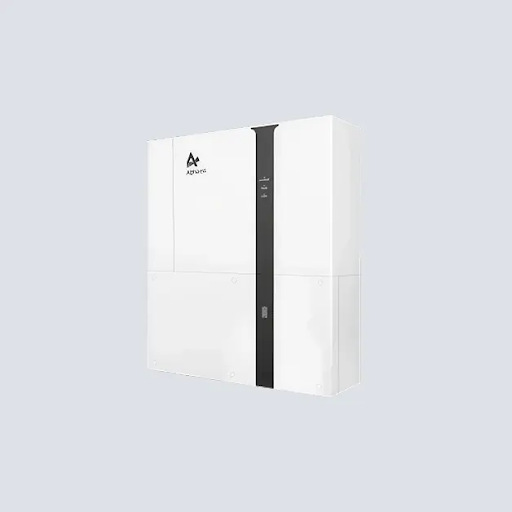
Of all the options in this comparison, the Alpha ESS Smile 13.3 achieves 40.02kWh with the fewest modules, and that distinction matters in practice. Three modules means the smallest physical footprint here, which counts for a lot when wall space is tight, when the job is a retrofit, or when a fast and low-disruption install is a hard requirement.
Monitoring runs through Alpha ESS's Alphacloud platform, covering charge state, solar production, and consumption in real time. The 10-year performance warranty carries Munich Re underwriting, which gives it genuine weight beyond a standard manufacturer promise.
| Feature | Specification |
Performance Warranty |
10 years |
Product Warranty |
5 years (extended warranty optional) |
Workmanship Warranty |
5 years |
Nominal Capacity |
40.02kWh |
Usable Capacity |
40.02kWh |
Depth of Discharge (DoD) |
100% |
Phase Compatibility |
Single Phase |
Blackout Protection |
Add On |
App |
Alphacloud
|
IP Rating |
IP65 / IP21 |
Fox ESS EQ4800 (41.93kWh / 9 modules)
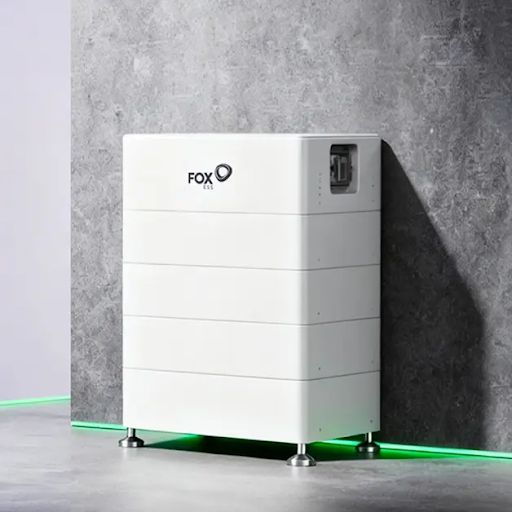
If raw nominal capacity is the primary brief, the Fox ESS EQ4800 is the answer. At 41.93kWh across nine modules, it tops every other option in this comparison on that single metric. Nine modules does mean more wall space and a longer installation day, so this one is best suited to households where storage capacity is the priority and space isn't the constraint.
The EQ4800's broad inverter compatibility and modular expansion architecture are its practical standouts. It integrates cleanly with existing Fox ESS setups and a range of third-party inverters, and the modular structure supports scaling up over time if energy needs grow.
| Feature | Specification |
Performance Warranty |
10 years |
Product Warranty |
10 years |
Nominal Capacity |
41.93kWh |
Usable Capacity |
~37.73kWh |
Depth of Discharge (DoD) |
90% |
Phase Compatibility |
Single Phase and Three Phase |
Blackout Protection |
Yes |
App + App Features |
FoxCloud 2.0
|
IP Rating |
IP65 |
Alpha ESS Smile5 10.1 (40kWh / 4 modules)
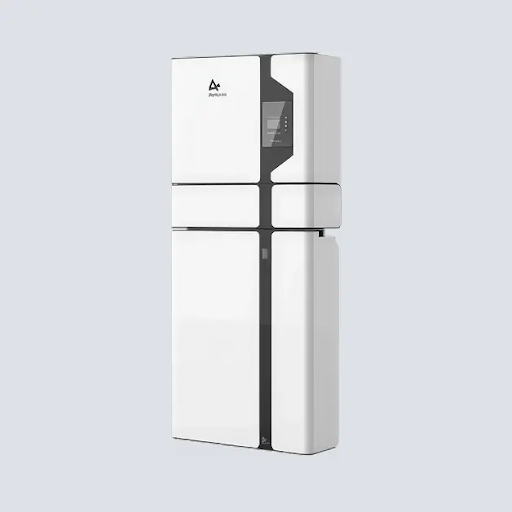
Four modules and a clean 40kWh nominal rating make the Alpha ESS Smile5 10.1 one of the more straightforward options in this tier. A 95% depth of discharge delivers approximately 38kWh of usable capacity per cycle, and the installation footprint is manageable for most homes without needing to push into six, eight, or nine modules to get there.
LFP chemistry and Alpha ESS's warranty structure are the longevity credentials. The 10-year performance guarantee with Munich Re underwriting applies, and Alphacloud handles day-to-day monitoring without requiring a separate platform.
| Feature | Specification |
Performance Warranty |
10 years |
Product Warranty |
5 years (extended warranty optional) |
Workmanship Warranty |
5 years |
Nominal Capacity |
40kWh |
Usable Capacity |
38kWh |
Depth of Discharge (DoD) |
95% |
Phase Compatibility |
Single Phase |
Blackout Protection |
Add On |
App |
Alphacloud
|
IP Rating |
IP65 / IP21 |
Growatt ALP LV (40kWh / 8 modules)
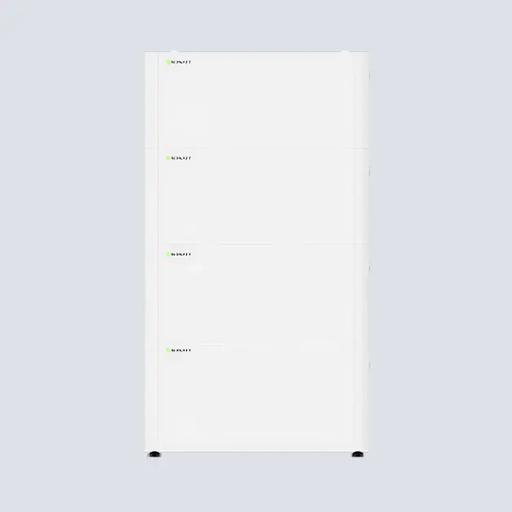
Value-focused installations with an existing Growatt setup are where the Growatt ALP LV makes the most sense. Eight modules reach 40kWh at a competitive upfront price point, and the native integration with Growatt inverters through ShinePhone, Shiner, and ShineTools is a genuine advantage when the inverter pairing is already locked in.
The depth of discharge sits between 90 and 92%, which produces around 36 to 36.8kWh of usable capacity per cycle. That's the lowest usable-to-nominal ratio in this comparison, and it's worth factoring in if you're optimising for maximum evening discharge. Eight modules also requires more wall space than four or five-module alternatives, so installation logistics need consideration early.
| Feature | Specification |
Performance Warranty |
10 years |
Product Warranty |
10 years |
Workmanship Warranty |
5 years |
Nominal Capacity |
40kWh |
Usable Capacity |
~36.8kWh |
Depth of Discharge (DoD) |
90-92% |
Phase Compatibility |
Single Phase |
Blackout Protection |
Add On |
App |
ShinePhone / Shiner App / ShineTools |
IP Rating |
IP65 |
Sigenergy SigenStor 8.0 (40kWh / 5 modules)
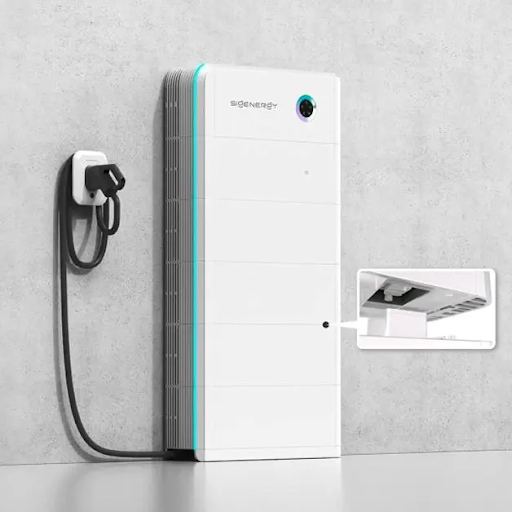
A 100% depth of discharge is the headline number for the Sigenergy SigenStor 8.0, and it's a legitimate differentiator at this capacity tier. Every rated kilowatt-hour across the full 40kWh is accessible each cycle, with nothing withheld as a buffer.
Five modules keep the footprint reasonable, and the technical feature set goes beyond most options here. The MySigen app delivers AI-assisted energy management covering time-of-use optimisation, EV charging coordination, and real-time energy flow visualisation. Three-phase compatibility and blackout protection are both included as standard, making the SigenStor 8.0 well suited to households running complex loads, multiple circuits, or an EV from day one.
| Feature | Specification |
Performance Warranty |
10 years |
Product Warranty |
10 years |
Workmanship Warranty |
5 years |
Nominal Capacity |
40.3kWh |
Usable Capacity¹ |
39kWh |
Depth of Discharge (DoD) |
100% |
Phase Compatibility |
Single Phase and Three Phase |
Blackout Protection |
Yes |
App |
MySigen
|
IP Rating |
IP66 |
¹ Capacity note: The SigenStor nominal capacity (5.38 kWh / 8.06 kWh) reflects the total energy stored in the LiFePO4 cells under laboratory conditions. The usable capacity (5.2 kWh / 7.8 kWh) is approximately 3% lower, as the BMS reserves a small buffer at each end of the charge curve to protect cell longevity. The 100% DoD rating applies to the usable capacity window, not the nominal figure. When sizing a SigenStor system, use 5.2 kWh or 7.8 kWh per module as your working capacity.
Tesla Powerwall 3 (40.5kWh / 1 hero unit + 2 expansion units)
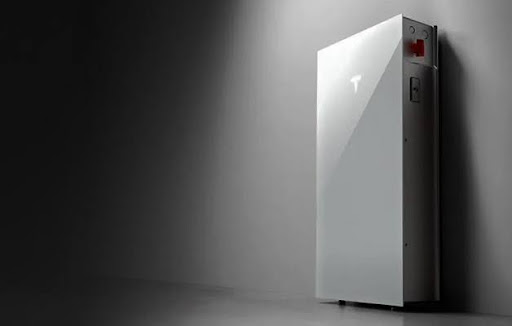
The integrated inverter design is what sets the Tesla Powerwall 3 apart from every other option in this comparison. A Tesla Powerwall 3 with 2 expansion units reach 40.5kWh without requiring separate inverter configuration or additional switchboard hardware for backup, which simplifies both the installation and the warranty accountability structure considerably.
Grid-forming blackout protection is included as standard, three-phase compatibility is built in, and the Tesla app is one of the more polished monitoring platforms in the market. For households that want a clean, single-brand system at a Tesla 40kWh battery mark with a minimal installation profile. The Powerwall 3 at this configuration is a hard one to argue against.
| Feature | Specification |
Performance Warranty |
10 years |
Product Warranty |
10 years |
Nominal Capacity |
40.5kWh |
Phase Compatibility |
Single Phase and Three Phase |
Blackout Protection |
Yes (included) |
App + App Features |
Tesla App
|
IP Rating |
IP67 |
Alpha ESS Smile G3 (40.4kWh / 4 modules)
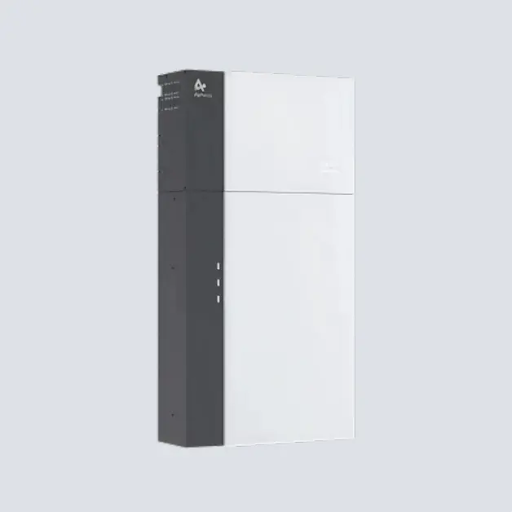
Among all the Alpha ESS options in this comparison, the Alpha ESS Smile G3 delivers the best usable capacity per cycle. Four modules, 40.4kWh nominal, and a 96% depth of discharge combine to produce approximately 38.8kWh of usable output, which places it competitively across the full seven-system field on that metric.
The 60A charge and discharge current rate is a practical spec worth noting: faster solar absorption during strong midday generation windows and a capable, steady dispatch rate through evening peak demand. The 10-year performance warranty guarantees at least 80% of original usable capacity at the decade mark, underwritten by Munich Re. Maximum expandable capacity reaches 60.5kWh, leaving meaningful headroom for households whose energy needs are likely to grow.
| Feature | Specification |
Performance Warranty |
10 years |
Product Warranty |
5 years (extended warranty optional) |
Workmanship Warranty |
5 years |
Nominal Capacity |
40.4kWh |
Usable Capacity |
~38.8kWh |
Depth of Discharge (DoD) |
96% |
Phase Compatibility |
Single Phase |
Blackout Protection |
Add On |
App + App Features |
Alphacloud
|
IP Rating |
IP65 / IP21 |
Maximum Expandable Capacity |
60.5kWh |
All products installed by Solar Battery Group include a 5-year workmanship warranty from the date of installation.
Not sure which battery suits your home? Use our comparison tool to filter by capacity, warranty, blackout protection and IP rating across all the brands we stock.
How Much Does a 40kWh Solar Battery Cost in Australia?
A fully installed 40kWh solar battery system will typically land between $28,000 and $48,000 before incentives. Any installer quoting a precise number without reviewing your site, switchboard, existing solar setup, and backup requirements should be treated with caution.
What Shapes the Final Price
Product selection: warranty backing, usable capacity, and backup capability drive real price differences between products at the same nominal capacity.
Module count: an eight or nine-module installation takes materially longer than a three or four-module equivalent, and labour costs are significant at this scale.
Existing infrastructure: a compliant switchboard and recent hybrid inverter means a faster, cheaper job. Older systems requiring upgrades or gateway hardware add cost consistently.
Backup scope: full home backup costs more than critical-loads-only. Define what you need before comparing quotes.
Phase configuration: three-phase installations are more complex and more expensive. Confirm it is included in the quote rather than assumed.
Location: regional labour rates and site access are legitimate cost variables.
How the Federal Rebate Applies at 40kWh
The Cheaper Home Batteries Program, updated from 1 May 2026, applies a three-tier STC structure to battery installations. At 40kWh, the rebate calculation crosses all three tiers, and the composition of the rebate at this capacity is worth understanding before comparing total costs.
The Tiered STC Structure
| Capacity Range | STC Factor Applied |
0-14kWh |
100% |
14-28kWh |
60% |
28-50kWh |
15% |
For a 40kWh battery:
- The first 14kWh receives the full STC Factor
- The next 14kWh (from 14 to 28kWh) attracts 60% of the Factor
- The remaining 12kWh (from 28 to 40kWh) attracts only 15% of the Factor
The practical implication: 12kWh of a 40kWh battery, 30% of the total system, earns rebate at the lowest tier rate. This is a more significant reduction than at 30kWh, where only 2kWh sat in the bottom tier.
For buyers evaluating 40kWh against 28kWh, the rebate structure favours 28kWh strongly. A household choosing 40kWh is making a deliberate decision to prioritise storage capacity over rebate optimisation, which is the right call when daily consumption genuinely supports it and a poor call when it does not.
The STC Factor Is Declining Every Six Months
From May 2026, the STC Factor drops in January and July each year rather than annually. As of May 2026, the Factor stands at 6.8, having moved from 8.4.
Projected rebate per kWh on the first 14kWh:
| Period | Rebate per kWh (first 14kWh) |
May-Dec 2026 |
~$272 |
Jan-Jun 2027 |
~$228 |
Jul-Dec 2027 |
~$208 |
Jan-Jun 2028 |
~$184 |
Jul-Dec 2028 |
~$164 |
Jan-Jun 2029 |
~$144 |
Jul-Dec 2029 |
~$124 |
Jan-Jun 2030 |
~$104 |
Jul-Dec 2030 |
~$84 |
Source: Choice. Approximately 10% admin fees are commonly deducted. The 14kWh between 14 and 28kWh attracts 60% of these figures. The 12kWh above 28kWh attracts 15%.
Despite the tiered structure, the total rebate on a 40kWh system remains meaningful in dollar terms during the current STC window.
For a precise rebate calculation based on your specific installation, contact the Solar Battery Group team on 1300 223 224.
What to Look For in a 40kWh Battery System
At this investment level and storage capacity, the evaluation criteria warrant rigorous application.
Battery chemistry. LFP (Lithium Iron Phosphate) is the appropriate chemistry for a residential system cycling daily across a decade or more. Its documented thermal stability, resistance to capacity fade under sustained deep cycling, and established safety profile across large-scale deployments make it the correct choice at 40kWh. Other lithium chemistries degrade more rapidly under the daily discharge patterns a high-consumption home battery will experience.
Usable capacity, verified. At 40kWh nominal, the difference between a 90% DoD product and a 96% DoD product is 2.4kWh per cycle and more than 8,700kWh across ten years. Compare on usable kWh, confirm the DoD figure in the product data sheet, and check what the warranty conditions require regarding minimum state of charge in daily operation.
Round-trip efficiency. At 40kWh of daily throughput, a 2 to 3% difference in round-trip efficiency between competing products represents 800 to 1,200kWh of additional energy loss annually. Verify the published figure and note whether it applies to DC-coupled or AC-coupled operation, as the two configurations produce different efficiency outcomes.
Warranty structure and financial underwriting. A 10-year performance warranty is the market floor. The guaranteed capacity retention at year ten, the compensation mechanism for shortfall, and the identity of the party standing behind the commitment financially are the variables that differentiate warranties at this level. Munich Re underwriting provides third-party financial assurance that a manufacturer's own balance sheet cannot replicate. At an outlay potentially exceeding $40,000, the structure of the warranty is a first-order evaluation criterion.
Backup scope and switchover speed. Full home backup, critical-loads-only backup, and no backup are materially different products. Confirm which is included in the quote, what additional hardware is required, and the switchover time for outage events. UPS-grade millisecond switchover protects sensitive electronics and prevents appliance resets. Slower switchover systems do not. For a 40kWh system where backup capacity is substantial, the operational quality of that backup function matters.
Phase compatibility. Three-phase households require three-phase-compatible battery systems. Several products in this comparison offer single-phase only. Confirm your household's phase configuration before shortlisting products.
Module count and installation footprint. The seven products in this comparison range from three to nine modules at equivalent capacity. Installation space, labour time, and wall loading all vary accordingly. Confirm your installation site can accommodate the physical requirements of your preferred product before finalising a selection.
CEC product approval and SAA installer accreditation. Both are mandatory for rebate eligibility and code-compliant installation. Non-negotiable at any capacity.
Is a 40kWh Solar Battery Right for You?
The answer is yes for a specific and well-defined group of Australian households, and not for a broader group that would be better served by 20 or 30kWh of storage at a lower cost.
The case for 40kWh is strongest when:
- Daily household consumption reliably exceeds 35kWh, measured from actual smart meter data across multiple seasons
- Three or more EVs are charging overnight, or two large-format EV batteries are in regular use
- The home has fully eliminated gas and electricity carries the entire heating, cooling, hot water, and cooking load
- A small business or home office adds consistent overnight load that is not reflected in typical residential consumption benchmarks
- Extended grid outages are a realistic risk and meaningful backup capacity is a genuine operational requirement
The case against 40kWh applies when:
- Daily consumption is below 30kWh and no material demand growth is planned
- The solar array cannot reliably deliver 50 to 60kWh of daily generation to support full battery charging
- Budget constraints make the rebate-efficient choice at 28kWh the stronger financial decision
The starting point is always actual consumption data. Twelve months of smart meter data, reviewed across seasonal variation and including any expected load additions within the next two to three years, is the right basis for a 40kWh decision. An installer who makes a recommendation without reviewing that data is not giving you the advice this purchase warrants.
Why Solar Battery Group
Solar Battery Group is Australia's largest solar battery installer, with more than 26,000 completed installations and over 30 years of operating experience nationwide. Every installer holds CEC or SAA accreditation. Every product on the shelf carries Clean Energy Council approval.
At 40kWh, the sizing decision, the solar pairing question, the rebate calculation, and the product selection are all interconnected. The team at Solar Battery Group works through each of them from your actual consumption data, not from assumptions about your household size or postcode.
For a tailored recommendation on a 40kWh solar battery, call 1300 223 224 or request a free quote.