

A practical guide to choosing a high-capacity solar battery in Australia
Some Australian households will never get enough from a standard 10 or 13kWh battery. Multiple EVs, a fully electrified home with no gas, a regional property where outages last days, or a small business with overnight loads — for these, the question is not "how much should I spend" but "how much do I actually need." At 50kWh, you are not trimming a bill. You are redesigning how your home uses energy.
50kWh vs Other Capacities: Where Does This Tier Sit?
Most home batteries sold in Australia fall into three groups:
- Small: 2.5kWh - 9kWh
- Medium: 10kWh - 15kWh
- Large: 16kWh - 30kWh+
At 50kWh, you are well above the large tier. That is not a problem if your household genuinely needs it. For a specific group of Australians, it is exactly the right call.
What Does 50kWh of Storage Actually Mean at Home?
Think of a battery like a fuel tank. The kWh number is the size of the tank. How long it lasts depends on how hard you run the engine.
The average Australian household uses about 20kWh per day. A 50kWh battery holds two and a half times that. For a typical home, that is overkill. But the households buying 50kWh systems are not typical. They tend to look more like this:
| Load | Typical Daily Consumption |
5+ person household (QLD winter baseline) |
~32kWh |
Single EV charge (mid-size) |
+10-15kWh |
Second EV charge |
+10-15kWh |
Heat pump hot water |
+3-5kWh |
Pool or spa pump |
+2-4kWh |
Blackout protection reserve (15-20%) |
+7-10kWh held aside |
VPP dispatch reserve (10-15%) |
+5-8kWh held aside |
Add those up and 50kWh stops looking extravagant. It starts looking like the right fit.
Estimated Daily Electricity Use in Winter (kWh/day) — 5+ Person Households
| State / Territory | Winter Seasonal (kWh) | Est. Daily Winter (kWh/day) |
NSW |
2,761 |
30.0 |
QLD |
2,910 |
31.6 |
SA |
2,716 |
29.5 |
Based on Frontier Economics data, within Australian Energy Regulator's Residential Energy Consumption Benchmarks.
The Households That Genuinely Need a 50kWh Battery
Fully electrified homes with no gas. When electricity runs everything — heating, cooling, hot water, cooking — daily consumption climbs fast. A fully electrified five-person home in Victoria, Queensland or New South Wales can easily need 35 to 45kWh overnight in winter, before any EV charging.
Homes with two or more EVs. One EV adds 10 to 15kWh of overnight charging. Two EVs add 20 to 30kWh. A 50kWh battery absorbs that on top of household overnight use and still leaves a useful backup reserve.
Regional or semi-rural properties. When grid outages last days rather than hours, a 50kWh battery paired with solar provides genuine multi-day backup. That changes the calculation entirely compared to an urban home that can fall back on the grid within hours.
Small businesses with overnight loads. A cafe, retail outlet, or workshop with refrigeration or climate control running overnight can have the same storage needs as a large household.
Households in or planning to join a VPP. Virtual Power Plant programs (Amber Electric, Origin, AGL) can call on 10 to 15% of your battery during peak grid events. On a 50kWh system, that is up to 7.5kWh potentially dispatched before your evening peak. You need the extra headroom.
Note: meaningful VPP participation also requires a capable inverter. A small inverter cannot respond fast enough to short price windows, regardless of how large the battery is.
Is a 50kWh Battery Enough to Charge an EV?
Yes, in most cases. The key is understanding that you rarely charge an EV from flat. You top up whatever was used that day.
For a vehicle covering 50 to 80km daily, the top-up is typically 10 to 15kWh, not the full battery pack of 60 to 80kWh.
| EV Scenario | Approximate Daily Charge Requirement |
Short commute (40-60km/day) |
8-12kWh |
Average commute (60-100km/day) |
12-18kWh |
Long commute or regional driving (100-150km/day) |
18-28kWh |
Full recharge from near-empty |
55-80kWh |
A 50kWh battery covering a five-person household overnight (25 to 30kWh) plus one typical EV top-up (12 to 15kWh) sits comfortably within capacity with reserve to spare.
Two EVs charging the same night is manageable for average daily commutes, but if both vehicles are regularly charging from low, 50kWh may feel tight. In that case, the smarter move is solar diversion charging during the day — letting the panels charge the EVs directly while they are parked — and keeping the battery for overnight household use.
How Long Does a 50kWh Battery Last on a Single Charge?
It depends entirely on how much power your home draws at night. Here is a plain-language guide:
| Evening/Overnight Draw | Household Profile | Estimated Runtime |
~1kW |
Small home, lights, fridge, basic appliances |
47-50+ hours |
~2kW |
Average household, moderate A/C |
23-25 hours |
~3.5kW |
Large family home, heavy A/C |
13-14 hours |
~5kW |
EV charging, heat pump, pool |
9-10 hours |
~8kW+ |
Two EVs plus full household |
6-7 hours |
~12kW+ |
Full electrification plus multiple EVs |
4-5 hours |
Quick rule of thumb: Divide 50 by your average overnight kilowatt draw and you get the approximate hours. Not sure what that is? Check your inverter app or energy monitor for post-5pm consumption. A bill alone will not tell you, unfortunately; it averages everything out and hides the peaks.
How Long Does It Take to Charge a 50kWh Battery?
Two things determine charge time: how much solar your array produces, and how much of that generation is surplus after your home uses what it needs during the day.
Important to understand: Your solar panels do not send all their output to the battery. Your home draws power throughout the day. Only the leftover surplus charges the battery.
A 20kW array producing 80kWh on a sunny day is not delivering 80kWh to the battery. If your home uses 20kWh during the day, the battery gets roughly 60kWh of charging opportunity — enough to fill a 50kWh system with room to spare. On a cloudy winter day, that surplus can shrink to 20 to 30kWh and the battery may only partially charge.
| Solar Array Size | Clear Summer Day | Cloudy Winter Day |
15kW |
Likely full charge |
40-60% charge |
20kW |
Full charge with headroom |
60-80% charge |
25kW+ |
Full charge in most conditions |
Full charge most days |
From the grid (off-peak top-up): At a typical 5kW charge rate, a 50kWh battery takes around 10 hours to charge from empty. From 20 to 30% remaining, expect 6 to 8 hours. A time-of-use tariff with overnight off-peak rates can supplement solar on low-generation days.
The key takeaway: Battery sizing and solar sizing are not separate decisions. An installer who recommends a 50kWh battery without modelling your actual daily solar surplus — not just total generation — is skipping a critical step.
Inverter Power: The Bottleneck Most 50kWh Buyers Miss
This is the section most guides leave out, and it is one of the most important.
The simple version: A battery stores energy. An inverter controls how fast that energy flows in and out. A big battery with a small inverter is like a large water tank with a narrow pipe. It fills slowly, drains slowly, and cannot deliver water at the rate you need it.
At 50kWh, an undersized inverter is a serious problem:
- A 5kW inverter takes roughly 10 hours to charge a 50kWh battery from empty. A usable solar surplus window is rarely more than 7 to 8 hours. The battery will end most days undercharged.
- During a blackout, a 5kW inverter limits what you can run simultaneously. An EV charger alone typically draws 7 to 11kW. Add a heat pump and a cooktop and the inverter cannot keep up — you are load-shedding during the outage.
- For VPP and energy trading, speed matters. Price spikes last minutes. A 5kW inverter cannot export energy fast enough to capture them.
The rule of thumb: A 2:1 to 3:1 ratio between battery (kWh) and inverter (kW) is the standard guide. That means a 5kW inverter suits a 10 to 15kWh battery. A 50kWh battery warrants an inverter in the 15 to 25kW range, or a multi-inverter setup.
When reviewing any quote for a 50kWh system, ask:
- What is the continuous charge rate of the inverter?
- What is the continuous discharge rate during backup?
- Can the inverter handle my peak simultaneous load?
If the quote pairs a 50kWh battery with a 5kW inverter, that is a red flag worth raising.
Usable Capacity: What the Spec Sheet Does Not Tell You
The 50kWh on the label is the nominal capacity. What you can actually use each day is governed by the Depth of Discharge (DoD) rating.
| DoD Rating | Usable Capacity (from 50kWh nominal) |
90% |
45kWh |
95% |
47.5kWh |
96% |
48kWh |
100% |
50kWh |
Why it matters: The gap between 90% and 100% DoD is 5kWh per day. Across ten years of daily cycling, that is more than 18,000kWh of storage you paid for but cannot use. Always compare products on usable kWh, not nominal.
Round-trip efficiency is the other number to check. Every time energy goes into and out of the battery, a small percentage is lost as heat. A 3% efficiency difference between products adds up to roughly 550kWh of wasted energy per year at 50kWh daily throughput. The best systems in this class run at 97 to 98% round-trip efficiency.
Backup reserve: If you want blackout protection, a slice of the battery is kept in reserve and never used for daily cycling. A 15% backup reserve on a 50kWh system means 7.5kWh is permanently held aside. That is energy you cannot use day-to-day, so factor it into your sizing.
How Much Solar Generation Does a 50kWh Battery Require?
Simple rule: A 15kW solar array is the practical minimum for a 50kWh battery. A 20kW array is the sensible recommendation for most households. If you have multiple EVs or full electrification, model 25kW.
Why? A home consuming 50kWh daily needs roughly 60kWh or more of solar generation to cover daytime use and fully recharge the battery. In southern states or on partially shaded roofs, a 15kW system often cannot deliver that in winter. A 20kW array provides the buffer.
Other factors worth knowing:
- DC-coupled systems are more efficient at capturing solar generation. Energy goes from panels to battery in a single conversion step, rather than being converted twice. At 50kWh daily throughput, that efficiency difference is real.
- Array size and battery size are linked. Do not finalise either one in isolation.
- EV charging shifts the numbers. If you are modelling two EV charges per day, include those in your total daily energy budget before sizing the array.
Comparing 50kWh Solar Battery Options in Australia
Solar Battery Group offers five systems at the 50kWh mark. They span four to six modules, cover both single and three-phase households, and range from modular stack architectures to fully integrated inverter-battery designs. Here is what actually separates them.
Sigenergy SigenStor 8.0 (48kWh / 6 modules)
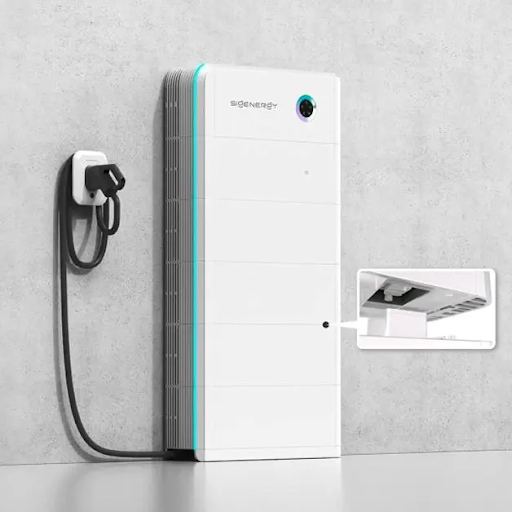
At six modules, the SigenStor 8.0 is one of the more capable residential storage options available in Australia, delivering a nominal capacity of 48.36kWh with 46.8kWh accessible in real-world use every cycle. Single-phase and three-phase compatibility are both included as standard, alongside built-in blackout protection, making it a practical fit for virtually any Australian home straight out of the box.
The MySigen app ties it all together with AI-powered optimisation, EV charging coordination, and real-time energy flow monitoring. The system manages self-consumption and time-of-use scheduling automatically, so households get maximum value from their solar and storage without lifting a finger. For households that want smart, automated management without manual intervention, the SigenStor 8.0 handles the optimisation in the background.
| Feature | Specification |
Performance Warranty |
10 years |
Product Warranty |
10 years |
Workmanship Warranty |
5 years |
Nominal Capacity |
48.36kWh |
Usable Capacity¹ |
46.8kWh |
Depth of Discharge (DoD) |
100% |
Phase Compatibility |
Single Phase and Three Phase |
Blackout Protection |
Yes (included) |
App + App Features |
MySigen
|
IP Rating |
IP66 |
¹ Capacity note: The SigenStor nominal capacity (5.38 kWh / 8.06 kWh) reflects the total energy stored in the LiFePO4 cells under laboratory conditions. The usable capacity (5.2 kWh / 7.8 kWh) is approximately 3% lower, as the BMS reserves a small buffer at each end of the charge curve to protect cell longevity. The 100% DoD rating applies to the usable capacity window, not the nominal figure. When sizing a SigenStor system, use 5.2 kWh or 7.8 kWh per module as your working capacity.
Alpha ESS Smile5 10.1 (50kWh / 5 modules)
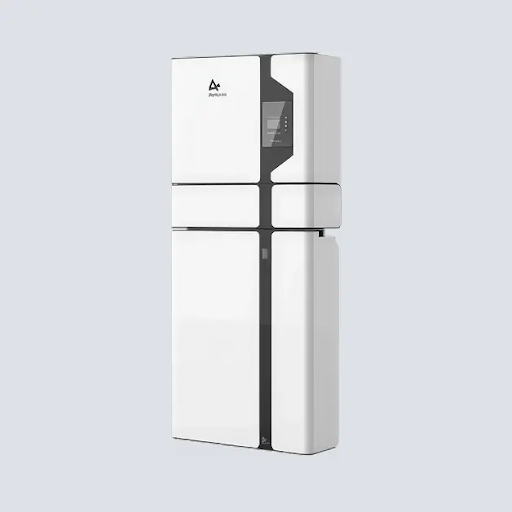
The Alpha ESS Smile5 10.1 hits the 50kWh nominal mark cleanly across five modules, making it a straightforward option for households where round numbers matter for consumption modelling. Five modules keep the installation footprint manageable without requiring the extended wall space of six, eight, or nine-module alternatives.
The Smile5 10.1 is a three-phase system, suited to homes with three-phase power or small commercial premises on a three-phase connection. Alpha ESS's Alphacloud monitoring platform covers charge state, solar production, and consumption in real time. The 10-year performance warranty carries Munich Re underwriting, which provides financial backing beyond a standard manufacturer commitment.
| Feature | Specification |
Performance Warranty |
10 years |
Product Warranty |
5 years (extended warranty optional) |
Workmanship Warranty |
5 years |
Nominal Capacity |
50kWh |
Usable Capacity |
~47.5kWh |
Depth of Discharge (DoD) |
95% |
Phase Compatibility |
Three Phase |
Blackout Protection |
Add On |
App |
Alphacloud
|
IP Rating |
IP65 |
Alpha ESS Smile G3 (50.5kWh / 5 modules)
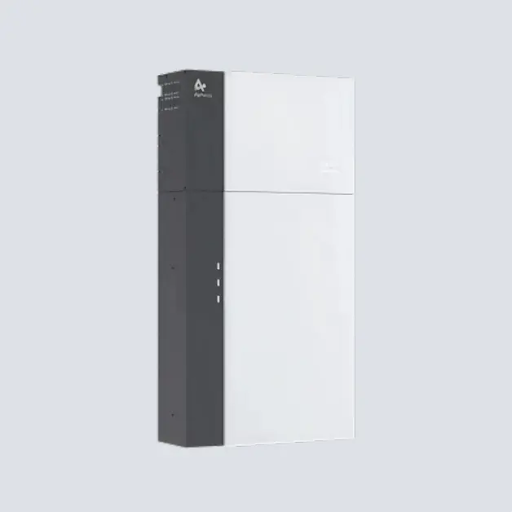
Five modules and a 50.5kWh nominal rating make the Alpha ESS Smile G3 one of the cleaner options at this capacity point. A 96% depth of discharge delivers approximately 48.5kWh of usable output per cycle, which is competitive across the full field at this tier.
The 60A charge and discharge current rate supports faster solar absorption during strong midday generation windows, which matters at a capacity where filling the battery on a single generation day requires meaningful throughput. The 10-year performance warranty guarantees at least 80% of original usable capacity at the decade mark, underwritten by Munich Re. Maximum expandable capacity reaches 60.5kWh, providing headroom for households whose energy needs are likely to increase.
| Feature | Specification |
Performance Warranty |
10 years |
Product Warranty |
5 years (extended warranty optional) |
Workmanship Warranty |
5 years |
Nominal Capacity |
50.5kWh |
Usable Capacity |
~48.5kWh |
Depth of Discharge (DoD) |
96% |
Phase Compatibility |
Single Phase |
Blackout Protection |
Add On |
App + App Features |
Alphacloud
|
IP Rating |
IP65 / IP21 |
Maximum Expandable Capacity |
60.5kWh |
Alpha ESS Smile5 13.3 (53.2kWh / 4 modules)
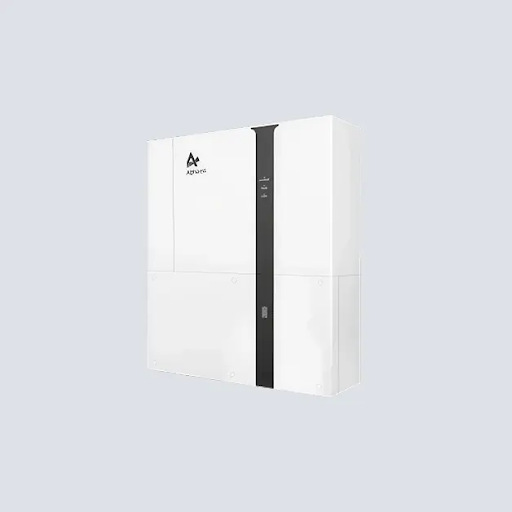
Four modules reaching 53.2kWh is the standout structural fact about this configuration. Every other product at this capacity tier needs five or six modules to reach equivalent storage. The Alpha ESS Smile5 13.3 at four modules means a smaller installation footprint, a faster install day, and less wall space consumed for the same or greater nominal capacity.
The 100% depth of discharge rating confirms that all 53.2kWh of nominal capacity is accessible each cycle. For households where every kilowatt-hour of evening coverage matters, the combination of the highest nominal capacity in this comparison and a 100% DoD rating makes the Smile5 13.3 the field leader on raw usable output. Munich Re underwrites the 10-year performance warranty.
| Feature | Specification |
Performance Warranty |
10 years |
Product Warranty |
5 years (extended warranty optional) |
Workmanship Warranty |
5 years |
Nominal Capacity |
53.2kWh |
Usable Capacity |
53.2kWh |
Depth of Discharge (DoD) |
100% |
Phase Compatibility |
Single Phase |
Blackout Protection |
Add On |
App |
Alphacloud
|
IP Rating |
IP65 / IP21 |
Tesla Powerwall 3 (54kWh / 1 hero unit and 3 expansion units)
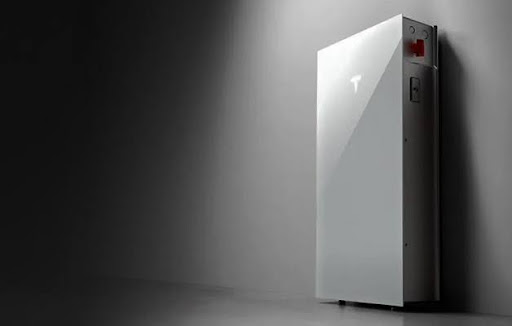
The Tesla Powerwall 3 plus three expansion units reach 54kWh and deliver that capacity through an architecture that is structurally different from every other option in this comparison. The Powerwall 3's fully integrated inverter means there is no separate inverter to configure or coordinate. Solar connects directly to the battery, grid connection is handled internally, and backup switching is built in without additional hardware.
For households that want a clean, single-brand system with minimal installation complexity and a polished monitoring experience, the Powerwall 3 at four units is difficult to argue against on those grounds. Grid-forming blackout protection is standard across all units. Three-phase compatibility is built in. The Tesla app covers real-time monitoring, time-of-use scheduling, storm watch pre-charging, and VPP participation from a single interface.
| Feature | Specification |
Performance Warranty |
10 years |
Product Warranty |
10 years |
Nominal Capacity |
60kWh |
Usable Capacity |
54kWh |
Depth of Discharge (DoD) |
90% |
Phase Compatibility |
Single Phase and Three Phase |
Blackout Protection |
Yes (included) |
App + App Features |
Tesla App
|
IP Rating |
IP67 |
All products installed by Solar Battery Group include a 5-year workmanship warranty from the date of installation.
Not sure which battery suits your home? Use our comparison tool to filter by capacity, warranty, blackout protection and IP rating across all the brands we stock.
How Much Does a 50kWh Solar Battery Cost in Australia?
Expect to pay between $35,000 and $45,000 fully installed, before rebates.
Here is what moves the number:
Product choice. Warranty depth, usable capacity, and whether backup is included or an add-on all affect price.
Module count. Four modules install faster than six. Labour costs at this scale are significant.
Existing infrastructure. A compliant switchboard and a compatible hybrid inverter already in place cuts cost. An older system needing upgrades or a three-phase switchboard overhaul adds to it.
Backup scope. Full home backup costs more than protecting only critical circuits. Confirm exactly what is covered in any quote.
Location. Regional labour rates and site access can shift the final number by several thousand dollars.
If an installer quotes a price without reviewing your site, switchboard, and existing solar setup, treat that number with caution.
How the Federal Rebate Applies at 50kWh
The short version: At 50kWh, almost half your system sits in the lowest rebate tier. The rebate is still worth having, but it is noticeably smaller per dollar spent than at 14 or 28kWh.
Critical to know first: The battery rebate can only be claimed once per property. Unlike solar, where you can claim in stages, this is a one-shot decision. Get the sizing right before you commit.
How the tiers work:
| Capacity Range | Rebate Rate Applied |
0-14kWh |
100% of STC Factor |
14-28kWh |
60% of STC Factor |
28-50kWh |
15% of STC Factor |
For a 50kWh battery, the top 22kWh (from 28 to 50kWh) earns rebate at just 15%.
That is 44% of your system attracting the lowest rate.
The rebate is also shrinking over time. From May 2026, the STC Factor drops every six months.
| Period | Rebate per kWh (first 14kWh) |
May-Dec 2026 |
~$272 |
Jan-Jun 2027 |
~$228 |
Jul-Dec 2027 |
~$208 |
Jan-Jun 2028 |
~$184 |
Jul-Dec 2028 |
~$164 |
Jan-Jun 2029 |
~$144 |
Jul-Dec 2029 |
~$124 |
Jan-Jun 2030 |
~$104 |
Jul-Dec 2030 |
~$84 |
Source: Choice. Allow approximately 10% for admin fees. The 14-28kWh band attracts 60% of these figures. The 28-50kWh band attracts 15%.
If you are already planning to buy, timing matters. The rebate is declining and the 15% tier on the top half of the system means the total incentive at 50kWh is materially smaller than the headline figure suggests.
For a precise rebate calculation based on your installation, call the Solar Battery Group team on 1300 223 224.
What to Look For in a 50kWh Battery System
As a larger battery attracting lower rebates as of May 2026, this is not a decision to make on brand name alone. Here are the things that actually matter:
Chemistry: LFP only. Lithium Iron Phosphate (LFP) is the only chemistry worth considering for a system cycling daily over ten or more years. It handles deep daily discharge better than other lithium types and has a stronger safety profile. If a product does not specify LFP, ask.
Usable capacity, not nominal. Always compare on usable kWh. A 90% DoD product at 50kWh nominal gives you 45kWh per day. A 100% DoD product gives you 50kWh. That 5kWh gap adds up to more than 18,000kWh over ten years.
Round-trip efficiency. Aim for 97% or above. A 3% gap between products is roughly 550kWh of extra energy lost per year.
Warranty backing. A 10-year performance warranty is the baseline. Check who is financially backing it. Munich Re underwriting means a third party with genuine financial standing is on the hook. A warranty backed only by the manufacturer depends on that company still existing in 2035.
Inverter sizing. Confirm the continuous charge and discharge rate of the inverter, not just the battery's capacity. At 50kWh, a 15 to 25kW inverter is appropriate. Anything smaller will leave the system underperforming.
Backup quality. Confirm whether backup is full home or critical loads only. UPS-grade millisecond switchover protects sensitive electronics. Slower systems do not.
Phase compatibility. Three-phase homes must confirm this before selecting a product. Some options in this comparison are single-phase only.
Physical footprint. Four-module systems install faster and use less wall space than six-module equivalents. Check your available space before finalising.
CEC approval and accredited installation. Non-negotiable for rebate eligibility and code compliance.
Is a 50kWh Solar Battery Right for You?
50kWh is the right answer for a specific group of households. For many others, 20 to 30kWh at lower cost and a better rebate tier is the smarter choice.
50kWh makes sense if:
- Your daily consumption reliably exceeds 40kWh, confirmed by actual meter data across seasons
- You have two or more EVs charging overnight, or one large EV regularly charging from low
- Your home runs entirely on electricity with no gas
- You are in an area where grid outages can last days and real backup matters
- You are planning VPP participation and want to contribute without shortchanging your own overnight coverage
- A home business adds overnight load that pushes daily consumption above 45kWh
50kWh probably is not right if:
- Your daily use is below 35kWh with no significant load growth planned
- Your solar array cannot reliably generate enough surplus to fill it
- A smaller system at a higher rebate tier gives you a better financial return
- Your EVs can charge from solar during the day rather than from battery at night
The right starting point is twelve months of meter data, reviewed across seasons, with expected new loads included.
Why Solar Battery Group
Solar Battery Group is Australia's largest solar battery installer, with more than 26,000 completed installations and over 30 years of experience nationwide. Every installer holds CEC or SAA accreditation. Every product carries Clean Energy Council approval.
At 50kWh, the battery, the solar array, the inverter, and the rebate calculation are all connected. Getting any one of them wrong affects the rest. The Solar Battery Group team works from your actual consumption data, not assumptions.
Call 1300 223 224 or request a free quote to get started.