

A practical guide to choosing a small solar battery in Australia
5kWh suits a particular kind of buyer: a small household or unit after essential-circuit backup, someone wanting a budget-friendly entry point into storage, or someone simply adding a module to a battery they already own.
5kWh is also the smallest battery size that qualifies for the federal Cheaper Home Batteries Program rebate. If any of that sounds like you, this guide is for you.
5kW vs 5kWh: What is the Difference?
Searches for a "5kW solar battery" almost always mean 5kWh.
A 5kW solar system measures peak power output: the rate.
A 5kWh battery measures storage: the volume, like a tank rather than the pipe filling it.
Every capacity reference in this guide means 5kWh of stored energy.
What is a 5kWh Solar Battery?
5kWh means 5 kilowatt-hours of stored electricity, usually charged from rooftop solar with the option to top up on off-peak grid power.
Where 10kWh and 30kWh batteries are built for whole-home backup, a 5kWh battery is generally sized for essential circuits (lights, Wi-Fi, fridge, TV) with continuous output typically around 3kW rather than 5kW+.
A 5kWh battery can contribute to heavier loads like ducted air conditioning or EV charging, but inverter output and runtime are the limiting factors. If an appliance draws more than the battery's continuous output, the shortfall comes from solar or the grid. Even when the battery can keep up, high-draw loads empty it quickly. For example, a 7kW EV charger would use a full 5kWh in well under an hour. For many households that's fine, and a 5kWh battery may be the right-sized buffer at the right-sized cost.
Who Actually Needs 5kWh of Storage?
5kWh suits a narrower band of households than 10kWh or 30kWh systems, but it's a genuinely good fit for:
- Small households or units using 6-10kWh a day
- Apartments and townhouses with smaller loads and smaller roofs
- Essential-circuit backup rather than whole-home backup
- Budget-conscious buyers wanting an accessible entry point, expandable later
- Anyone adding to an existing battery as a single extra module
If you're using 20kWh or more a day, charging two EVs overnight, or running heavy electric heating and cooling, 5kWh will likely feel undersized.
It's important that you size against your actual usage data before committing.
Do You Actually Get the Full 5kWh Out of a 5kWh Solar Battery?
Usually not quite, and the gap matters more at this size, since there's less headroom to spare.
Depth of Discharge (DoD) is the share of stored energy usable each cycle.
| Depth of Discharge | Usable Capacity per Cycle |
90% |
4.5kWh |
92% |
4.6kWh |
95% |
4.75kWh |
96% |
4.8kWh |
100% |
5.0kWh (theoretical) |
That 0.3-0.5kWh difference between a 90% and a 96% DoD battery sounds small, but on a 5kWh system it's close to a tenth of total capacity.
It's enough to matter on the nights you're relying on every last bit of stored charge.
Round-trip efficiency typically loses 5-10% per cycle in conversion, slightly higher for AC-coupled retrofits.
Backup reserve: if blackout protection is on, a portion of capacity (often set around 10-20%, and adjustable on most systems) is held back for backup rather than used for daily cycling. That energy isn't lost; it's kept available for when the grid goes down.
A percentage-based reserve takes the same share of every battery, whether it's 5kWh, 10kWh or 30kWh. What changes is how much is left over for daily use. A 20% reserve on a 5kWh battery leaves about 4kWh for everyday cycling, compared with about 8kWh on a 10kWh battery, so on a smaller system the reserve setting can be the difference between a useful evening's coverage and a fairly short one.
How Long Will a 5kWh Battery Power a House?
What matters here is your average power draw in kW, not your total daily kWh.
| Average Evening Draw | Household Profile | Estimated Runtime |
~0.5kW |
Essentials only |
9+ hours |
~1kW |
Small household |
4-5 hours |
~1.5kW |
Average unit or small home |
3 hours |
~2.5kW |
Larger household, some heating/cooling |
1.5-2 hours |
~3kW+ |
Heavy evening appliance use |
Under 1.5 hours |
*Using ~4.75kWh of usable capacity (95% DoD) as a baseline.
Most 5kWh batteries are rated around 3kW continuous output: enough for essentials, but they'll throttle or fall back to the grid under heavier simultaneous loads. Check your own post-5pm average draw from your inverter, not your daily bill total.
Is a Small Solar System the Right Pairing with a 5kWh Battery?
For most households considering 5kWh of storage, yes, provided the solar system is sized sensibly alongside it.
A 3kW to 6.6kW solar system is the natural partner for a 5kWh battery. A system in that range typically generates somewhere between 12 and 27kWh a day in good conditions, comfortably enough to cover daytime household use and still leave a meaningful surplus to charge a 5kWh battery, often within a few hours of strong midday sun.
Pairing a 5kWh battery with a much larger solar system, say 10kW or more, usually isn't a problem in itself, but it does mean a lot of surplus solar will still be exported rather than stored, since the battery fills quickly and has nowhere else to put the extra generation. In that case, it's worth asking whether the battery is the right size for the system, or whether the system was built with a future, larger battery in mind.
Not sure how the two should line up? Read our guide on how to size your battery to your solar panels.
5kWh as a Building Block: Why This Size Shows Up Everywhere
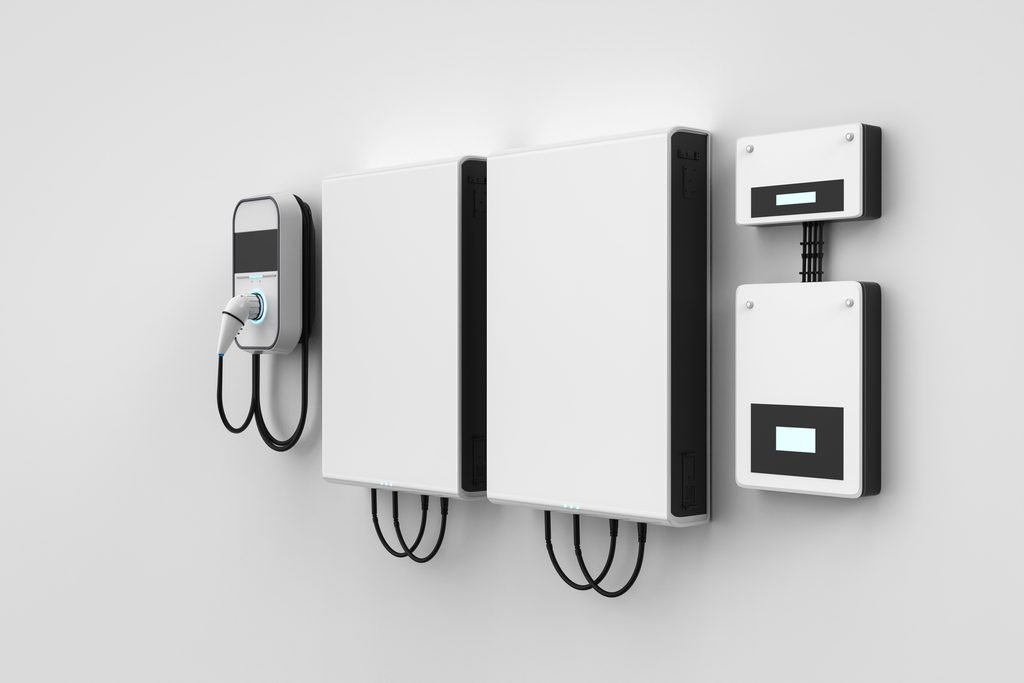
A 5kWh unit is rarely sold only as a standalone product: it's usually the module larger batteries are built from. The Alpha Smile B3 Plus runs on 5.04kWh modules (up to 30.24kWh across 6). The Anker SOLIX X1 uses 5kWh modules (up to 30kWh). The SAJ B2 uses 5.12kWh modules (up to 25.6kWh). Fox ESS's EQ4800 follows the same modular logic.
This size is a manufacturing sweet spot: big enough to matter, small and light enough to ship and wall-mount as a single unit. For homeowners, it means a 10kWh or 25kWh battery is often just more of the same module: a genuine upgrade path rather than a capacity ceiling.
Adding a 5kWh Module to an Existing Battery
If your battery's running short most evenings, adding a module is usually simpler than replacing the whole system. A few things worth knowing:
- Compatibility is brand- and model-specific: check your existing battery's model and age first
- There's usually a module ceiling, commonly 4-10 modules depending on the brand
- Firmware updates are often needed so the battery management system recognises the new module, a job for a licensed installer, not a DIY add-on
- It's a smaller job than a full install, since the inverter and switchboard connection are usually already in place
Not sure if your system can expand? Check your installation paperwork or get in touch with whoever installed it, or give us a call on 1300 223 224 to confirm.
How Much Battery Storage Do You Actually Need?
Start with your actual daily consumption, from your retailer or smart meter, not a national average:
- Small household or unit: roughly 6-10kWh/day
- Average small home: roughly 10-16kWh/day
- Larger home with air conditioning or electric hot water: 20kWh or more/day
Your evening load (roughly 5pm-midnight) matters more than your daily total: it's what the battery actually covers. Rule of thumb: minimum storage = 25% of daily consumption, plus a small backup buffer.
Above 20kWh/day, 5kWh will only cover a fraction of the evening: a 10kWh-plus system (or a 5kWh module added to one) is usually the better starting point. Our 10kWh Battery Buying Guide covers that step up.
How Long Will a 5kWh Solar Battery Last?
A quality LFP battery cycled daily is generally a 10-year asset, backed by a 10-year performance warranty on the leading products at this size. What shapes whether it gets there:
- Depth of discharge in daily use: most manufacturers rate cycle life around 80-90% average DoD
- Temperature: heat is the main driver of degradation; avoid direct afternoon sun or poorly ventilated spots
- Cycle frequency: daily cycling is expected and not harmful by itself
- What the warranty actually guarantees: check the capacity retention at year ten (commonly 70-80%); on a 5kWh battery, that gap (3.5kWh vs 4kWh) is proportionally bigger than on a larger system
Comparing Different 5kWh Solar Battery Options
Four modular systems start at, or very close to, 5kWh in a single unit. Here's how each one stacks up.
Alpha Smile B3 Plus
5.04kWh per module (~4.8kWh usable), expandable to 30.24kWh across six modules.
The case for it: The most fully specified of the four at this capacity, with a clearly stated 95% depth of discharge and a 10-year performance warranty backed by Munich Re, guaranteeing 80% capacity retention. A strong pick for buyers who want to compare hard numbers rather than take marketing claims on faith.
Worth knowing: Continuous output is capped at 3kW, so it's built for essential circuits rather than heavier, simultaneous loads.
View full Alpha Smile B3 Plus specs →
Anker SOLIX X1
5kWh per module, expandable to 30kWh across up to six modules per system.
The case for it: A notably slim design, around 15cm deep, which suits homes where wall space is tight. It's also built with Virtual Power Plant participation in mind, useful if you want your battery to start earning down the track.
Worth knowing: Anker's Australian warranty guarantees the battery will retain at least 70% of its original capacity over 10 years from installation, subject to a throughput limit of 14MWh per 5kWh of capacity (so 14MWh for a single module, up to 84MWh for six). The warranty ends at whichever comes first. Anker doesn't publish a depth of discharge figure on its current product page, so it's worth asking directly before comparing it against the others here.
View full Anker SOLIX X1 specs →
Fox ESS EQ4800
4.66kWh per module, expandable to 41.93kWh across up to nine modules. While 4.66kWh is the individual module capacity, the minimum complete system is 9.32kWh (two modules).
The case for it: Runs as a high-voltage system, which generally means better efficiency and lower current draw than low-voltage alternatives. Positioned as an easy, compact install, and the datasheet lists 100% depth of discharge.
Worth knowing: The datasheet rates battery output at about 2.24kW per module, so it scales with the stack (4.48kW for two modules, up to 20.16kW for nine). What your home actually gets also depends on the inverter it's paired with. Fox ESS's Australian warranty guarantees at least 70% capacity retention over 10 years or 19.66MWh of throughput per module, whichever comes first, and the battery must be registered at commissioning for the warranty to apply.
View full Fox ESS EQ4800 specs →
SAJ B2
5.12kWh per module (~4.6kWh usable), expandable to 25.6kWh across five modules.
The case for it: Also a high-voltage system, with both wall-mounted and ground-mounted installation options, useful where wall space isn't available. A straightforward modular structure from one to five modules.
Worth knowing: Depth of discharge, continuous output and warranty retention aren't published on the product page either.
Call 1300 223 224 or request a call back to compare your specific options against your home's energy needs.
How Much Does a 5kWh Solar Battery Cost in Australia?
Because fixed install costs spread across fewer kWh, a 5kWh battery often costs more per kWh than a mid-size system, even though the total outlay is lower.
A good-quality 5kWh battery installed typically lands in the $9,500 range (incl. GST) before incentives: toward the lower end if you already have a compatible hybrid inverter, higher if the install needs an additional inverter or charger unit.
After the National Battery Rebate (roughly $1,400 - $1,900 for this capacity), the effective price typically falls to around $5,000 - $7,000. Your exact figure depends on the STC value at time of purchase, your location, the specific product, and any extra electrical or compliance work required.
How the Federal Rebate Works for a 5kWh Battery
The Cheaper Home Batteries Program applies a three-tier STC structure:
| Capacity Range | STC Factor Applied |
0-14kWh |
100% |
14-28kWh |
60% |
28-50kWh |
15% |
A 5kWh battery's entire capacity sits in the top tier, earning the full STC Factor with no tier-straddling. The Factor itself declines every six months (8.4 in early 2026, down to 6.8 from May 2026, continuing to step down through 2030), so the earlier you install, the larger your rebate.
For a precise calculation based on your installation, call 1300 223 224.
What to Look For in a 5kWh Battery System
A smaller outlay still deserves careful comparison:
- Battery chemistry: LFP remains the right call for daily cycling, regardless of size
- Usable capacity, not nominal: always ask for the figure after depth of discharge
- Modularity and expansion ceiling: check if, and how far, the system can grow
- Warranty structure and backing: check the year-10 capacity retention guarantee and whether it's reinsurer-backed (e.g. Munich Re)
- Backup protection scope: the reserve held back matters proportionally more at 5kWh
- CEC product approval and SAA installer accreditation: a prerequisite for rebate eligibility and safe installation
Why Solar Battery Group
Solar Battery Group is Australia's largest solar battery installer: 40,000+ installations nationwide, 30+ years of industry experience, every installer is Solar Accreditation Australia (SAA) accredited (replacing CEC for installers), every product CEC-approved.
A 5kWh system deserves the same careful sizing as a bigger one. We work from your actual consumption data to recommend the right fit, whether that's a standalone system, an added module, or something larger.
Call 1300 223 224 or request a free quote to get started.