


New South Wales has been hit with some of the steepest predicted energy bill hikes. With increasing blackouts and instability of the energy grid, reduced solar feed-in tariffs as well as the new solar tax that especially applies to NSW and SA, now’s the right time to start taking back some control.
Thanks to the New South Wales Solar Battery Rebate 2025, it’s easier than ever to invest in solar battery storage. It’s the number one way you can maximise your bill reductions with solar.
There’s a lot changing overall in solar on 1 July 2025 for NSW residents. In this blog, we’re here to walk you through it.
What Is the Cheaper Home Battery Scheme?
Watch our overview on YouTube: Cheaper Home Battery Scheme (video).
The Cheaper Home Battery Scheme is a nationwide rebate, brought forth by the Federal Government initially as an election promise and it’s something that almost anyone and everyone can access now.
This scheme allows you to install a new standard solar battery on a new or existing solar system, with the Government covering approximately 30% of the installation cost.
30% off means the typical 10kW solar battery is now around $3,500 cheaper.
This can bring the price down to $5,000 for the solar battery installation that the average family in Australia needs.
If you already have a solar battery installed, you can also use this scheme to make the installation of an additional unit more affordable.
The scheme is uncapped and there are no restrictions on who can apply.
This includes:
- Homeowners
- Landlords
- Business owners
Wondering about eligibility for the solar rebate in NSW? You can learn more, check your eligibility and enter Solar Battery Group’s priority queue here: National Battery Rebate Program.
T&Cs apply. Final pricing may vary depending on the product selected, as rebates are calculated based on the usable kilowatt-hour (kWh) capacity of the installed battery system. This offer is based on anticipated eligibility for the Federal Government battery rebate.
Call 1300 223 224Request a quote

Energy Bills Have Been Rising in NSW
NSW customers have been consistently hit with price increases for electricity.
The Default Market Offer Prices report by the Australian Energy Regulator for 2025–26 announced that NSW residential customers who do not have a controlled load (for example separately metered electricity supply for appliances like hot water systems or pool pumps) would see an increase of 8.5% to 9.1% on their energy bills.
NSW residential customers with a controlled load would see up to 8.3% to 9.7%.
And small business electricity customers in NSW would see increases of 7.9% to 8.5%.
With rising costs of living for both energy and other essentials such as groceries, it’s a better time than ever to start using energy on your own terms - with a new solar battery.
Blackout Hotspots in NSW
Worried about energy reliability? Solar storage also has another added benefit apart from better savings on your electricity. That’s more independence from the grid when blackouts happen.
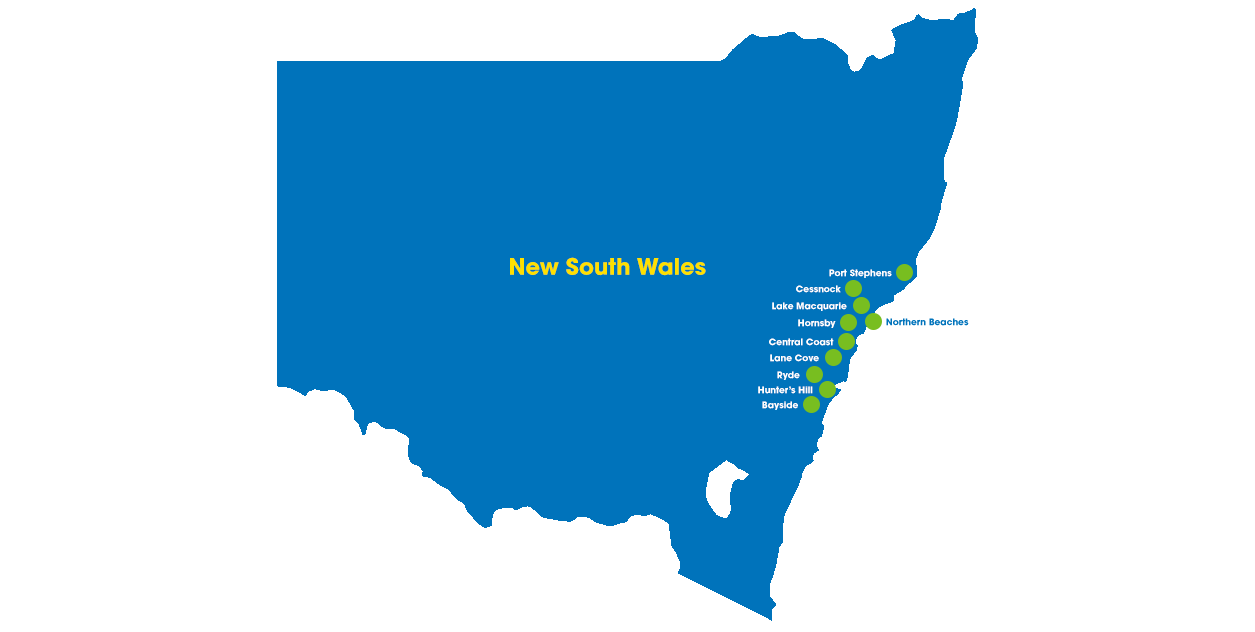
Top 10 LGA blackout hotspots in NSW
Hunter’s Hill, Lake Macquarie and Lane Cove were the top 3 blackout spots in NSW, in a report by PSS Distributors, a company specialising in interruptible power supply.
If you live in any of these areas, adding a solar battery to your solar system helps insulate you from outages, and keeps your property and air conditioning powered.
Average customer interruptions and duration by local government area:
- Hunter’s Hill - 1290 interruptions, 126 minutes average duration
- Lake Macquarie - 834 interruptions, 168 minutes average duration
- Lane Cove - 769 interruptions, 116 minutes average duration
- Ryde - 754 interruptions, 144 minutes average duration
- Central Coast - 753 interruptions, 146 minutes average duration
- Cessnock - 738 interruptions, 191 minutes average duration
- Bayside - 732 interruptions, 173 minutes average duration
- Port Stephens - 700 interruptions, 217 minutes average duration
- Northern Beaches - 662 interruptions, 154 minutes average duration
- Hornsby - 655 interruptions, 172 minutes average duration
Most Recent Widespread Outages in NSW
Here’s another way to look at blackout activity in NSW: heatwaves.
In November 2024, a severe heatwave broke out across eastern inland NSW for around 2–3 days. As a consequence the Australian Energy Market Operator issued multiple warnings of potential issues with electricity supply, at LOR 3 (the highest tier level of risk) before being downgraded to LOR 2 (moderate risk).
This affected Eastern inland NSW, areas in Western Sydney (40 degrees), some towns in the Hunter region such as Singleton and Muswellbrook (39 degrees), Broken Hill, Mildura, Griffith, Bourke, Moree, Dubbo, and more.
Penrith was at particularly high risk for an extended amount of time, with 5 consecutive days above 35°C.
Why Solar Storage Makes Sense Now, Especially if You Have an Existing Solar System
Declining feed-in tariffs
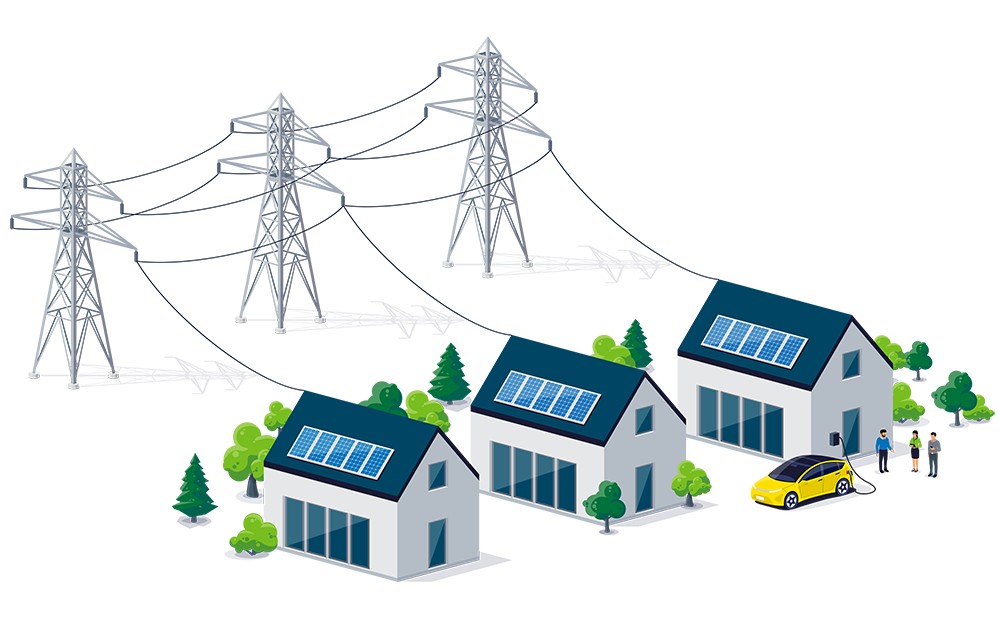
We all know more solar panels installed is better for the planet. However, as more and more homeowners and businesses install solar panels on their rooftop, and additionally organisations invest into large-scale solar farms, the supply for solar power has increased exponentially and put strain on the grid.
Because of this, many state-based regulators that previously set a minimum feed-in tariff rate for energy retailers, are now letting the retailers decide, with no mandatory minimum feed-in tariff. NSW is one of them.
This means that unfortunately, feed-in tariffs in NSW are heading down.
NSW solar tax
In addition to feed-in tariffs decreasing because more Australians have installed solar panels and there’s now reduced demand for power during the sunniest periods of the day, NSW and SA will be implementing the solar tax from 1 July 2025.
This is also officially known as the ‘two-way’ solar tariff. Solar system owners will be taxed when they export excess solar back into the grid during peak sunshine hours, 10am to 3pm.
Because of these changes, storing and using the solar power you generate will be the most beneficial way for NSW residents and businesses to use solar going forward.
Stacking Solar Rebates in NSW
The NSW Solar Battery Rebate (previously offered under the Peak Demand Reduction Scheme, or PDRS) has been suspended, and the state’s solar incentives have been revised.
Under the updated PDRS, households and businesses in NSW can now receive up to $1,500 in upfront incentives by connecting their solar battery to a Virtual Power Plant (VPP). The rebate scales with battery size - for example, a 27 kWh battery qualifies for around $1,500.
While the original rebate is coming to an end, stacking the Federal Cheaper Home Batteries Program with the NSW VPP incentive can deliver greater total savings, putting households and businesses in a stronger financial position than before.
What Is a VPP or Virtual Power Plant?
A VPP is like a pop up power plant that runs through a community of connected solar battery users who have opted in to export some of their generated and stored solar power in times when the Energy Provider running the VPP really needs more electricity. This can be in peak times or when there’s some instability in the grid.
These are opt-in programs where private retailers offer different incentives to make joining more attractive for solar battery users. The exported electricity also often provides higher rates of return than feed-in tariffs. Each VPP program is different, with some having specific battery requirements or more to join.
You do need to be mindful that it can be inconvenient to have your battery discharge power outside of your control, and VPP participation does contribute to wear and tear on the system. On the other hand, VPP participation can also greatly accelerate your payback period, which is the period it takes for your solar battery to pay for itself.
So, participating in a VPP is a choice that deserves some thought. You may need to do more research to decide what’s best for you.
The best way to start is comparing the VPPs and VPP offers available:
VPPs available in NSW
- AGL VPP
- Powershop ‘Charge Force’ VPP
- EnergyAustralia ‘PowerResponse’ VPP
- Powerclub VPP
- Discover Energy VPP
- Sonnetflat VPP
- Powershop ‘Grid Impact’ VPP (Offer)
- Ausgrid VPP
View all VPP offers availableNew solar batteries installed under the Cheaper Home Batteries Program must be VPP capable, however it is not mandatory to opt in if you don’t want to - if you just want to get the National Solar Battery Rebate.
Even without VPP participation, the cheaper access to solar batteries upfront will still be reducing the payback period across the nation.

Solar Irradiance Rates Across NSW
New South Wales is the third sunniest state in Australia, after Western Australia and then Queensland. However, as a state, we also have the most solar systems installed in the country (which is one of the key reasons behind why we’re slugged with the solar tax).
Here’s more information to give you the specifics around how much solar radiation our state enjoys. According to data from Global Solar Atlas, NSW sees an average global horizontal irradiance (GHI) of around 5.4kWh/m² per day.
Glossary: GHI is the total solar radiation that falls on a horizontal surface. It gives the direct normal value of how much sunlight reaches the earth.
This is also what daily solar exposure (as GHI) looks like across key cities in New South Wales:
- Sydney: ~4.5kWh/m² per day
- Parramatta: ~4.4kWh/m² per day
- Canberra: ~4.8kWh/m² per day
- Newcastle: ~4.7kWh/m² per day
- Wollongong: ~4.4kWh/m² per day
- Grafton: ~4.8kWh/m² per day
- Dubbo: ~5.2kWh/m² per day
In NSW’s top 3 blackout hotspots:
- Hunter’s Hill: ~4.4kWh/m² per day
- Awaba, Lake Macquarie: ~4.6kWh/m² per day
- Lane Cove: ~4.4kWh/m² per day
It’s all the more reason to get solar battery storage. There’s so much sunshine available to reduce your reliance on the grid and shrink your energy bills.
How many sunshine hours are there in New South Wales?
The Bureau of Meteorology sees moderate to high average daily sunshine annually, with some differences in the state between Coastal and Inland areas.
- Coastal NSW - including major population centres like Sydney, Wollongong, and the South Coast - receives lower daily average sunshine hours, typically ranging from 5 to 6 hours per day annually.
- Southern and highland regions, such as Canberra and the Southern Tablelands, show similar patterns due to cloud cover and seasonal variability.
- Northwest toward Bourke and Dubbo, average daily sunshine increases to around 8 hours, aligning these inland zones with the sunbelt corridor that stretches across interior Australia. This region benefits from clearer skies and lower coastal influence, making it among the sunniest parts of NSW.
Solar Batteries that Withstand NSW Weather
Depending on where you are in NSW, there’s extreme weather from both ends. With high heat and plunging cold temperatures. This can definitely have some impact on solar systems and battery storage. Add to this, the storms, hail, rain, dust, as well as salt mist in locations close to the coast.
Solar Battery Group supplies and installs premium solar batteries from trusted brand manufacturers that have designed and had their products tested to withstand these tough weather conditions.
So you can feel at ease with the longevity and effectiveness of your new solar battery storage.
Furthermore, our solar battery installers take your area’s and home’s environmental exposure in mind, to properly plan and weatherproof your battery installation.
Read more: How to monitor a Tesla Powerwall 3 battery
Powerful Easy-to-Use Interfaces for Smarter Energy Use
Did you know that a solar battery isn’t a set and forget device?
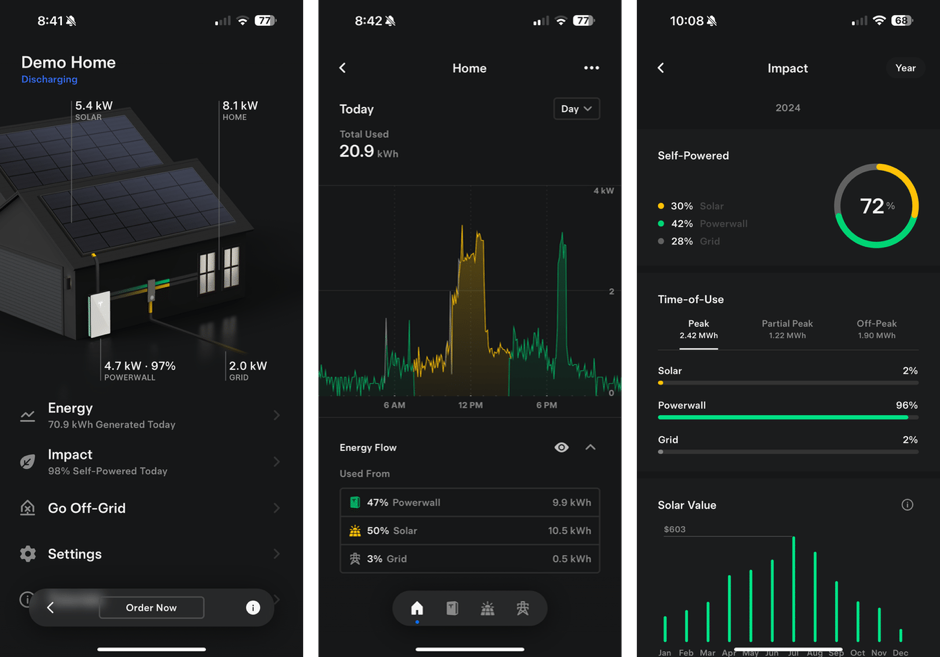
You can monitor, track, adjust and automate your usage based on the peak times when energy providers would usually charge you through the nose.
At Solar Battery Group, we partner with industry-leading brands that deliver solar battery systems that do more than store energy.
These systems also connect seamlessly with Home Energy Management Systems (HEMS) and smart home platforms like Google Nest, giving you real-time visibility and control over your solar generation, storage, and usage. But also, making it much easier and intuitive to use. For example, if you integrate your solar battery system with Google Home, you can use voice commands.
Imagine it being as easy as just saying, “Hey Google, discharge the Solar Battery to the house.”
Well, you’ll be able to.
Along with intelligent scheduling, you can charge your battery during sunny or off-peak hours and automatically use stored power during those peak grid times we talked about - effectively slashing your electricity bills and reliance on the grid.
Some solar batteries (such as Tesla Powerwall 3) provide this platform better than others. In other cases, these functions would also be available through our solar inverters.
If you want to learn more about what are your options for Smart Energy Management platforms, feel free to call 1300 223 224 and talk to an expert.

Average Estimated Payback Period in NSW for a Solar Battery
SolarQuotes estimates it will take 5.8 years in NSW to pay back a solar battery and around $1,180 annual savings, with the latest Cheaper Home Batteries Scheme and VPP participation.
For NSW households with above average energy usage habits, the estimated payback period is 5.6 years with around $1,271 in annual savings.
Watch the discussion on YouTube: Cheaper Home Battery Scheme - full episode.
Why Choose Solar Battery Group?
Solar Battery Group is trusted by thousands of Australians for clean energy solutions that work. We offer:
- End-to-end support, from eligibility checks to installation – boring paperwork? We can handle it all for you.
- Premium, weather-resistant batteries built for NSW
- Monitoring and maintenance plans available to lighten your mental load
- Solar solutions that match your usage, budget, and goals