


Far from the rest of the country, Western Australia has always needed to be more self-sufficient compared to other states in Australia. After all, when power outages strike, there’s no other grid than our own that we can use for backup. So unfortunately, blackouts are frequent and those disruptions can be significant in cost - with not much way to avoid them, especially for households or small businesses that can’t afford any means of backup.
Fortunately, there’s now a clear answer. With new financial help from the Federal Government that will be able to be stacked with WA’s solar battery rebate, 2025 will be an ideal time for those who already have a solar system to invest in a solar battery; and for those that deemed a solar system without a solar battery not worth it, to be given the help to finally make the leap.
In this guide, we’ll be breaking down everything you need to know - especially around what is changing on 1 July 2025. But first…
The WA Residential Battery Scheme
Western Australia’s (WA) Residential Battery Scheme will be able to work alongside the Federal Government’s Cheaper Home Batteries initiative - making it even easier for WA residents to take the leap. Without the new Federal rebate, the separate values are up to $1,300 for Synergy, and up to $3,800 for Horizon Power customers.
The expanded Residential Battery Scheme is predicted to be able to offer support for up to 100,000 households.

How much you can save by using both rebates
Together, eligible households will be able to access combined rebates of up to $5,000 for Synergy customers and up to $7,500 for those with Horizon Power.
This WA solar rebate will rely on a list of approved equipment, battery suppliers and installers. This list is yet to be confirmed.
Interest-free loans available for WA customers
In addition to the WA state based solar rebates, there are also no-interest loans available for up to $10,000 to households that have a combined annual income that comes out to less than $210,000.
The loan repayment period for these interest-free loans will be up to 10 years. They can be used for solar batteries. They can also be used for solar panels and inverters to upgrade a solar system or install a new solar system, as long as they are installed with a battery.
Every solar battery installed under the WA Residential Battery Scheme and/or interest-free loan also must participate in a VPP.
What Is the Cheaper Home Batteries Program?
Watch on YouTube: Cheaper Home Batteries Program (overview).
The Cheaper Home Batteries Program is a Labor election promise designed to help make solar batteries accessible so everyone can benefit from lower energy bills and reduced carbon emissions, which is now being delivered on.
- 10 million Australians are eligible
- 4 million households already have solar
- There are no restrictions on who can apply
From 1 July 2025, eligible households and small businesses will be able to access up to 30% off their solar battery installation. This rebate will be delivered through the Small-scale Renewable Energy Scheme (SRES), which means this value will come through increased STCs (small-scale technology certificates).
The way this will work is accredited CEC installers will be able to create and sell STCs on behalf of their customers, and give back the value as an upfront discount on their invoice.
Wondering about your eligibility for the solar rebate in Western Australia? You can learn more and join Solar Battery Group’s priority queue here: National Battery Rebate Program.
Call 1300 223 224Request a quote
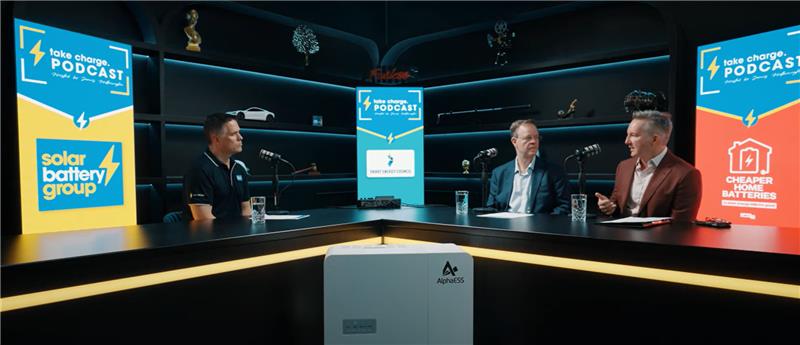
Watch the full podcast episode where we talk about the Cheaper Home Battery Scheme with Minister for Climate Change and Energy, Chris Bowen, and CEO of Smart Energy Council, John Grimes.
What Does 30% off an Installation Look Like?
This could be up to $3,500 off that you instead get to save, for a typical 10kWh solar battery (what the average household will need).
With the addition of the Western Australia state-based solar battery rebate, there’s even more that WA residents and business owners can save upfront.
*It’s important to understand that the Australian Government says this is around 30% off; we cannot guarantee this figure will be the exact amount provided back on the installation. This discount may be subject to eligibility criteria and location.

Rising Energy Bills in Western Australia
There’s no doubt about it. Energy bills in Western Australia are going to go up. Synergy is increasing pricing for their Home Plan for residential customers, and they also are raising some of their standard fees as well (such as demolition fee and meter reprogram fee). Much of WA power also relies on local gas and fossil fuels, which have a finite supply and are also getting exported overseas. This finite supply means as it gets harder to source these resources, prices will continue to rise.
As a consequence, electricity prices for July 2025 are expected to rise by 2.5%.
ABC News reports that the WA Government has been subsidising your electricity bills for the past 5 years, but this subsidy will soon be shut off. There will be no more energy credits; instead the WA Government wants to turn its focus on improving rent affordability and getting more housing built.
Projected Savings on Energy Bill
Here, Synergy used electricity usage data from 2024 to calculate average electricity bills for different customer groups over a standard billing cycle.

Estimated annual power bills by household type (WA - Synergy customers)
- Single - bi-monthly average $237; annual estimate $1,422
- Couple - bi-monthly average $311; annual estimate $1,866
- 3+ adults, no children - bi-monthly average $373; annual estimate $2,238
- Family (2 adults + 1+ children) - bi-monthly average $382; annual estimate $2,292
Source: SynergyLabor’s analysis suggests a home with existing solar saves up to $1,100 annually by adding a battery. Meanwhile, installing a new solar-and-battery system cuts bills by $2,300 yearly - about 90% of a typical family’s electricity cost. Based on these figures, almost all household types in WA served by Synergy may be able to significantly reduce or even eliminate their energy bills with a solar system with solar battery installed.
These figures stem from the Department of Climate Change, Energy, the Environment and Water and were cited on Labor’s initial release of the Cheaper Home Batteries Program announcement.
Explainer: What Is a VPP and What Does Participation Mean?
First, we’ll answer: what is a VPP?
A VPP’s full name is Virtual Power Plant. This is a network of solar batteries that are connected and managed together, like a singular power source, that is used by a VPP operator to monitor and use them to supplement the main power grid.
VPP participation means joining the network. There are different VPPs out there, across the different states and some exclusive to specific energy providers and solar battery brands, that compete on incentives to encourage you and other solar battery adopters to join.
Why it matters for WA residents installing a solar battery
- Solar batteries need to be VPP-capable to access the Cheaper Home Batteries Rebate (but it is not mandatory to plug in).
- You need to participate in a VPP to access the WA Residential Battery Scheme and/or no-interest loans.
It’s Not Just Energy Bills, But Reliability
Unfortunately, Western Australia experiences a high frequency and amount of outages as a state: planned for maintenance and unplanned because of unexpected events.
A history of blackouts in Western Australia
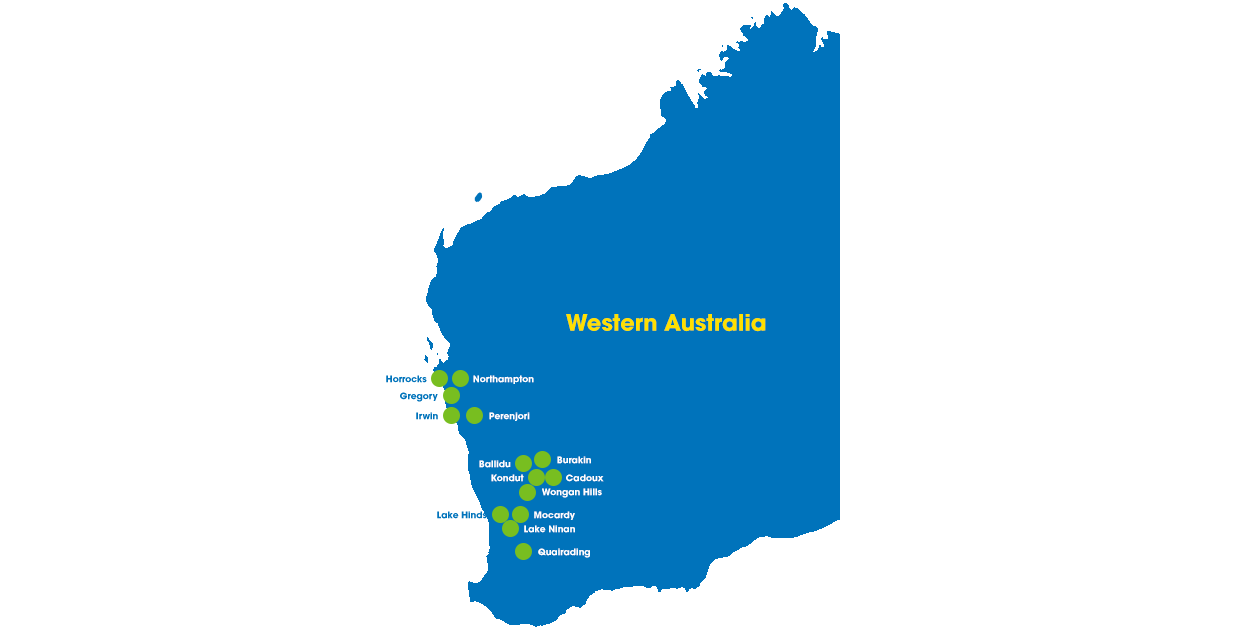
Midwest and Wheatbelt regions experience the most blackouts and the most lengthy power outages. Towns in Northampton, Perenjori, and Irwin have recorded an average of over 60 hours per customer in 2024. It’s another reason why solar batteries make a great solution for energy in WA.
So if you don’t like power outages, avoid these areas:
Common blackout hotspots in WA
- Northampton
- Perenjori
- Irwin
- Horrocks
- Gregory
- Quairading
- Wongan Hills
- Ballidu
- Burakin
- Cadoux
- Kondu
- Lake Hinds
- Lake Nina
- Mocardy
The city of Greater Geraldton also experienced bad outages, though not so bad as the above; with an average of 12 hours in outages per customer.
The causes of these outages tend to be around the age and length of power lines which makes them more prone to damage from strong weather events like storms, lightning and high winds.
Perth’s metro area also experiences outages, though they are less frequent. These outages can have a significant financial impact particularly on retail and hospitality businesses that rely on food and beverages requiring refrigeration.
But that is not all:
- Bushfires
- Wildlife interference (birds, snakes and other animals)
- Equipment failure and maintenance (planned outages to perform essential maintenance)
- Increased power demand
- Environmental degradation and land erosion
There’s never been a greater time and opportunity to reduce your reliance on the grid.

There’s Lots of Sunshine to Generate From in Western Australia
While Queensland is often called ‘the Sunshine State’, it’s actually Western Australia that is the state with the highest amount of sunshine hours daily in Australia.
According to data from the Global Solar Atlas, WA receives between 4.8 and 6.3 kWh/m² per day based on average global horizontal irradiance (GHI), depending on where you are in the region.
Glossary: GHI is the total solar radiation that falls on a horizontal surface. It gives the direct normal value of how much sunlight reaches the earth.
This is also what daily solar exposure (as GHI) looks like across key cities in Western Australia:
- Perth: ~6.1 kWh/m² per day
- Bunbury: ~5.2 kWh/m² per day
- Kalgoorlie-Boulder: ~5.6 kWh/m² per day
- Geraldton: ~5.8 kWh/m² per day
- Albany: ~4.8 kWh/m² per day
- Broome: ~6.3 kWh/m² per day
In some of WA’s top blackout hotspots:
- Northampton: ~5.8 kWh/m² per day
- Perenjori: ~5.8 kWh/m² per day
- Irwin: ~5.7 kWh/m² per day
This gives you a snapshot of how much natural sunshine you can capitalise on with a solar system and battery to reduce your bills and energy reliance - and increase your overall savings in the long term.
You’ll Be Able to Monitor, Track and Automate Your Solar Battery Use
We provide solar batteries and inverters that allow you to monitor the power you generate and store, from a smart platform you can jump onto from your phone or computer. You can set up automations and get notifications when something occurs, like a grid outage.
Some solar batteries will also be compatible with smart home platforms like Google Home and Amazon’s Alexa.
Imagine being able to say, “Hey Google, create a routine that turns on the Powerwall when the sun sets.”
Well now - you’ll be able to!
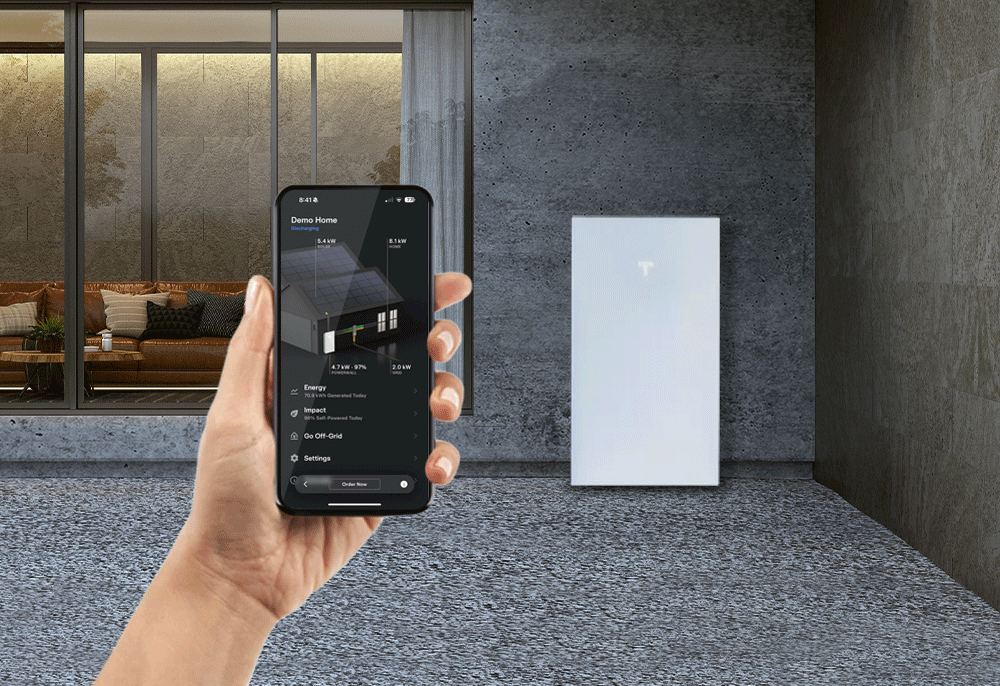
Read more: How to monitor a Tesla Powerwall 3 battery
Get Tough Solar Battery Brands for WA Weather
Part of what can be a concern for any outdoor installation is how harsh the weather and the environment outside are. Western Australia is subject to extreme forces, with high temperatures, strong winds, and the physical impact of hail and storm-carried debris.
Here you can get assurance with the tough solar batteries we have on offer. We’ve partnered with industry-leading brands like Tesla, Eveready, Ambrion, Hive and Alpha-ESS that have designed and built their batteries for outdoor endurance.
You’ll also get a 5 year workmanship, operation, performance and product warranty for all work carried out regarding your solar battery installation by us - this is on top of the battery brand’s manufacturer’s warranty (often a 10-year warranty).